By ISSF Admin (@mujifren)
On the night of November 26, 2008, as the first bullets shattered the glass at the Leopold Cafe, the Indian state did not just stumble; it fell into a coma.
For sixty harrowing hours, ten terrorists held a metropolis of twenty million people hostage.
But the true tragedy of 26/11 was not just the carnage on the streets of Mumbai; it was the unfolding spectacle of a government in New Delhi that, when faced with an act of war, chose the safety of submission.
This is the story of how the UPA government turned a crisis into a humiliation, dismantling India’s deterrence brick by brick.
Act I: The Night of the Living Dead (Operational Paralysis)
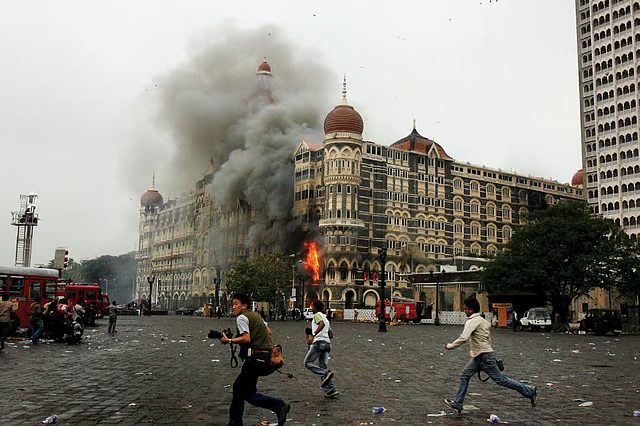
November 26, 2008. 21:30 Hours.
Mumbai is burning. Tracer bullets cut through the dark at Chhatrapati Shivaji Terminus. The dome of the Taj Mahal Palace Hotel is engulfed in flames, a funeral pyre for the country’s prestige broadcast live to the world.
November 27, 2008. 00:00 Hours.
In New Delhi, the Crisis Management Group finally convenes. The request comes from Maharashtra: Send the National Security Guard (NSG).
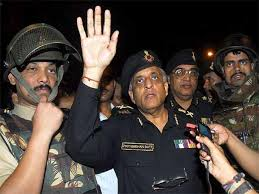
The “Black Cats” are the ultimate guarantee of the Indian state. But on this night, the guarantee bounces.
The NSG base in Manesar is ready. The commandos are kitted up. But there is no aircraft. The IL-76, the heavy lifter needed to transport the force, is not at Palam Airport. It is in Chandigarh.
02:00 Hours.
The IL-76 finally taxies onto the tarmac in Delhi. But the wheels don’t move.
Why?
The elite force is reportedly waiting for a passenger. Home Minister Shivraj Patil, the man responsible for the nation’s internal security, intends to fly with them.
While hostages are being executed in the Oberoi and Nariman House, the tip of India’s spear sits on the tarmac, waiting for a politician to arrive.
By the time the NSG boots hit the ground in Mumbai, it is 05:25 AM. The sun is rising. The terrorists, who had arrived at 9:30 PM the previous night, have had nearly ten hours to entrench themselves, plant IEDs, and rest.
The Golden Hour was lost not to the enemy, but to the lethargy of the state.
While the capital slept, Home Minister Patil was reportedly more concerned with his wardrobe.
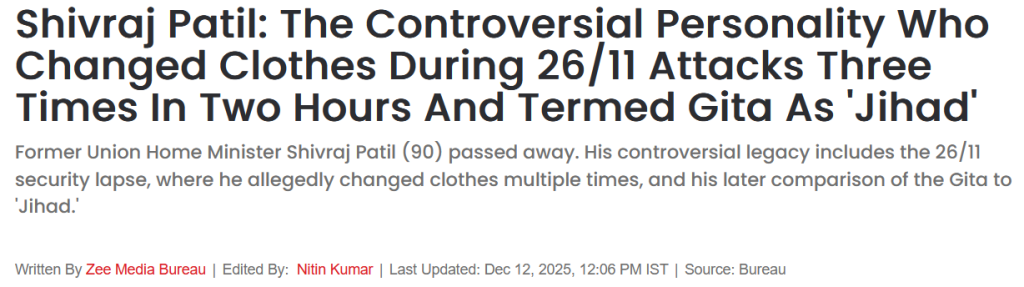
Media reports from the time highlighted his multiple dress changes for television appearances while the siege raged, painting a picture of a Nero fiddling while Rome burned.
Act II: The Phantom Option (Strategic Cowardice)
November 28, 2008. The Cabinet Room.
The air is thick with tension. The three Service Chiefs stand before Prime Minister Manmohan Singh and the Cabinet Committee on Security (CCS). The mood in the nation is incandescent.
The public demands retribution.
Air Chief Marshal Fali Homi Major places a file on the table. The Indian Air Force is not just angry; it is ready.
They have the coordinates of the Lashkar-e-Taiba (LeT) training camps in Muridke and Pakistan-Occupied Kashmir.
The Sukhoi-30 MKIs are primed. The target data is actionable. “We are ready to strike,” the Air Chief says.
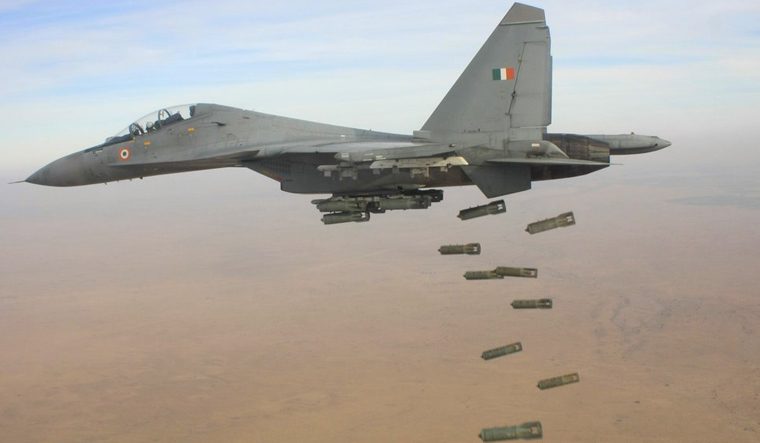
He assures the leadership that a surgical air strike will “teach Pakistan a lesson”.
The military waits for the nod. It never comes.
The response from the government is a deafening silence. “We will let you know,” the Chiefs are told.
The UPA government chooses “strategic restraint.”
They fear escalation.
They fear that attacking the terror camps might derail India’s “economic story.”
They outsource India’s security to the United States, hoping that a phone call from Condoleezza Rice to Islamabad will achieve what Indian missiles could not.
It was a decision that former National Security Advisor Shivshankar Menon would later describe in his book Choices as a moment where the government chose not to enforce deterrence, effectively signaling to the Pakistan Army that they could bleed India without cost.
Act III: The Paper Tigers (Dossier Diplomacy)
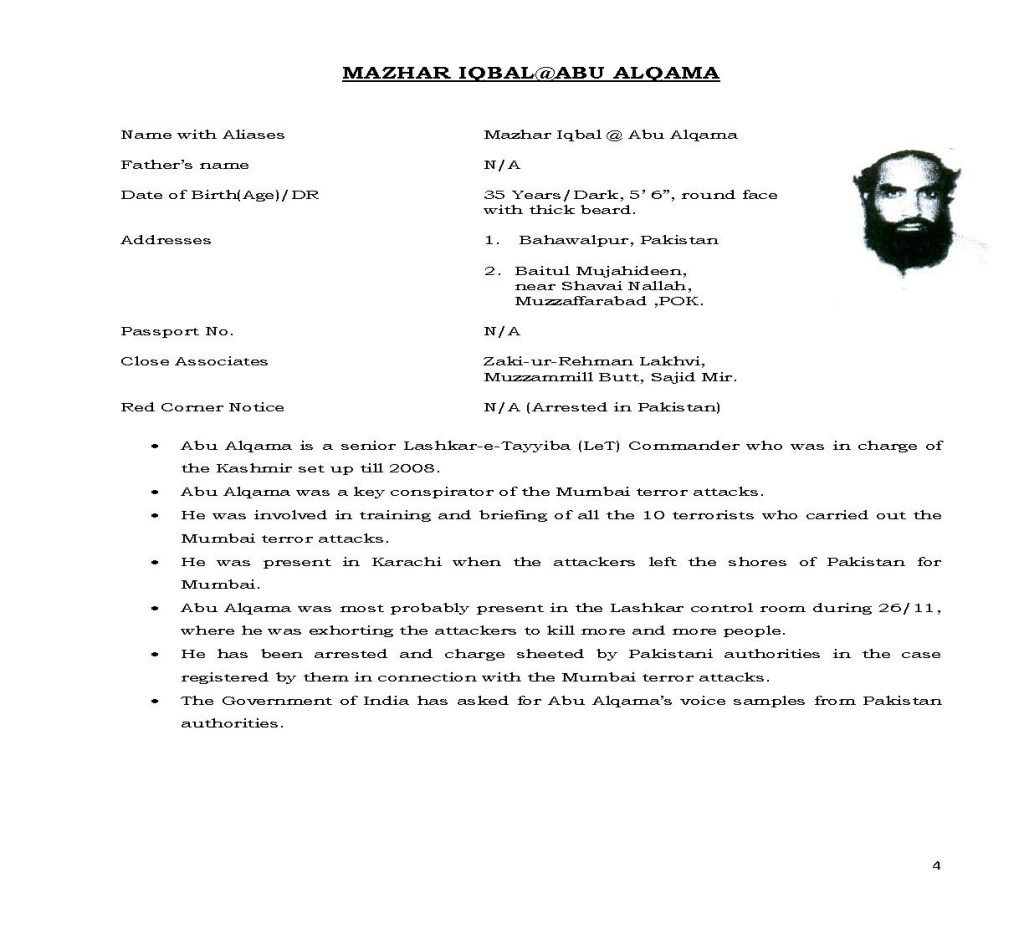
Having sheathed the sword, the government picked up the pen. Thus began the humiliating era of “Dossier Diplomacy.”
For the next few years, India became a petitioner in the court of global opinion.
The Home Ministry meticulously compiled “Grade-1 evidence”: the confession of the captured terrorist Ajmal Kasab, GPS data, satellite phone intercepts of handlers in Karachi screaming “Kill them!” to the gunmen.
India handed these dossiers to Pakistan — the very country accused of orchestrating the attack. The result was a farce. Pakistan’s Interior Minister Rehman Malik treated the dossiers with open disdain.
When India provided proof of the boat Kuber and the Yamaha engine used by the terrorists, Pakistan responded with a demand that was a diplomatic slap in the face: they asked for the DNA of the boat engine.
It was a mockery of justice. Instead of imposing costs, the UPA government submitted itself to a cycle of humiliation where the victim was forced to provide more and more “proof” to the perpetrator, only to be told it wasn’t enough.
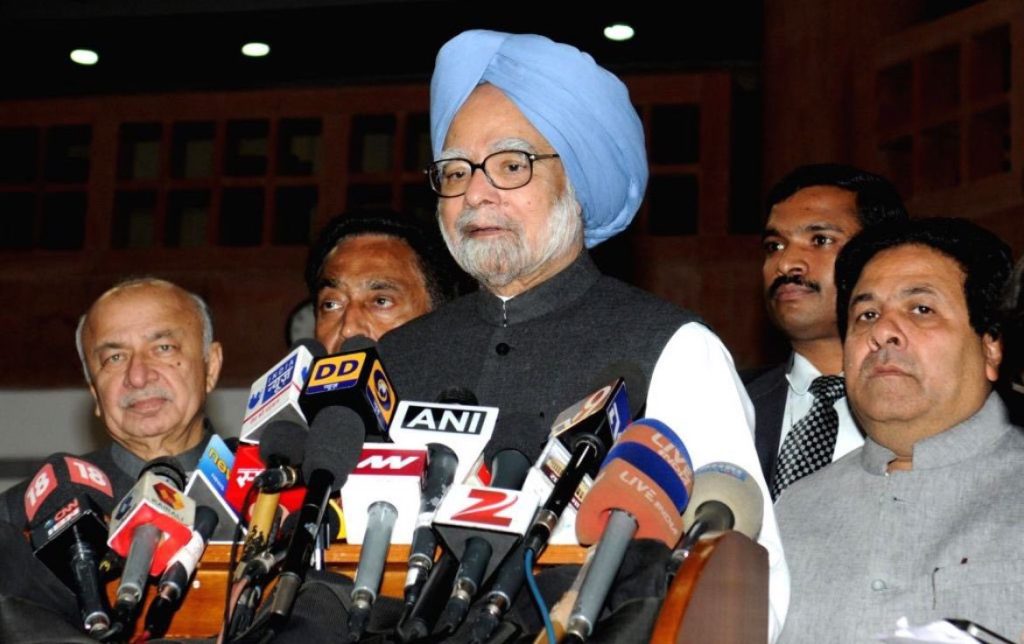
Act IV: The Handshake of Shame (Sharm el-Sheikh)
July 16, 2009. Sharm el-Sheikh, Egypt.
If 26/11 was a military failure, what happened in Egypt seven months later was a diplomatic catastrophe. Prime Minister Manmohan Singh met his Pakistani counterpart, Yusuf Raza Gilani.
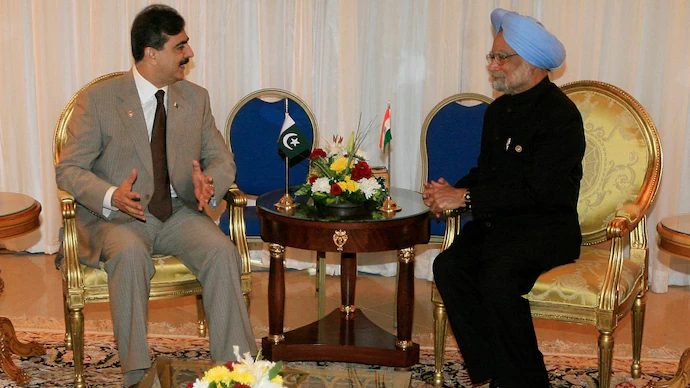
The resulting Joint Statement was a document of surrender. In a single stroke, the Indian government reversed decades of diplomatic leverage:
- Terror Delinked from Talks: They agreed that the “Composite Dialogue” would continue regardless of Pakistan’s action on terrorism. The pressure valve was released.
- The Balochistan Blunder: For the first time in history, an Indian Prime Minister allowed Pakistan to include a reference to “threats in Balochistan” in a bilateral document.
“Prime Minister Gilani mentioned that Pakistan has some information on threats in Balochistan and other areas.”
With this sentence, the UPA government equated India’s victimization in Mumbai with Pakistan’s internal separatist problems.
Pakistan’s propaganda machine went into overdrive, waving the statement as “proof” that India was fuelling terror in Balochistan.
In Parliament, BJP leader Yashwant Sinha thundered, “All the waters of the seven seas will not wash the shame of Sharm el-Sheikh”.
Act V: The Enemy Within (The “RSS Ki Saazish” Narrative)
While the government was soft on Pakistan, a section of its political ecosystem was busy manufacturing a domestic conspiracy.
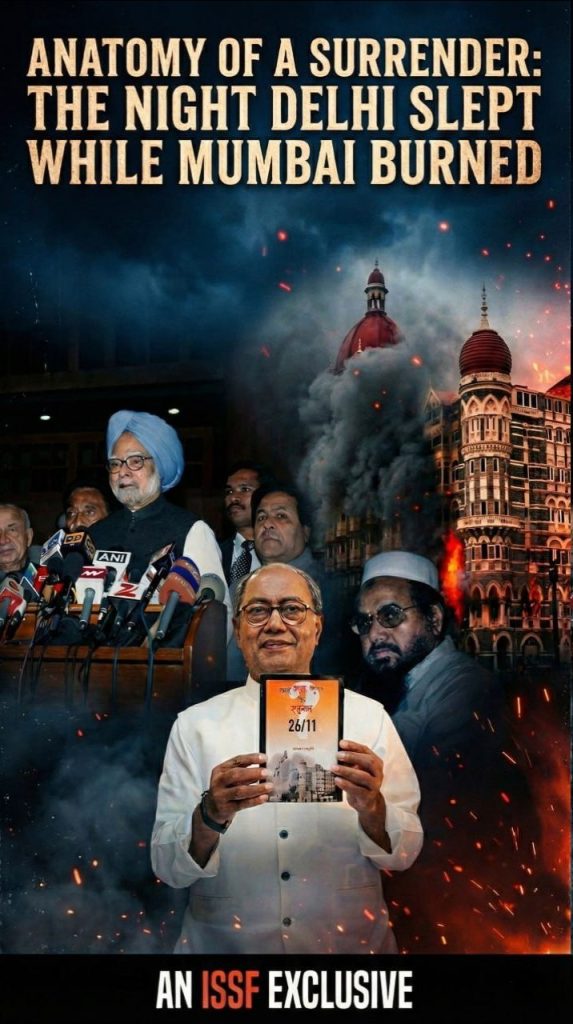
Even as Ajmal Kasab sat in an Indian jail, having confessed to being a jihadi from Faridkot, Pakistan, senior Congress leaders like Digvijay Singh attended the book launch of 26/11: RSS Ki Saazish (26/11: An RSS Conspiracy).
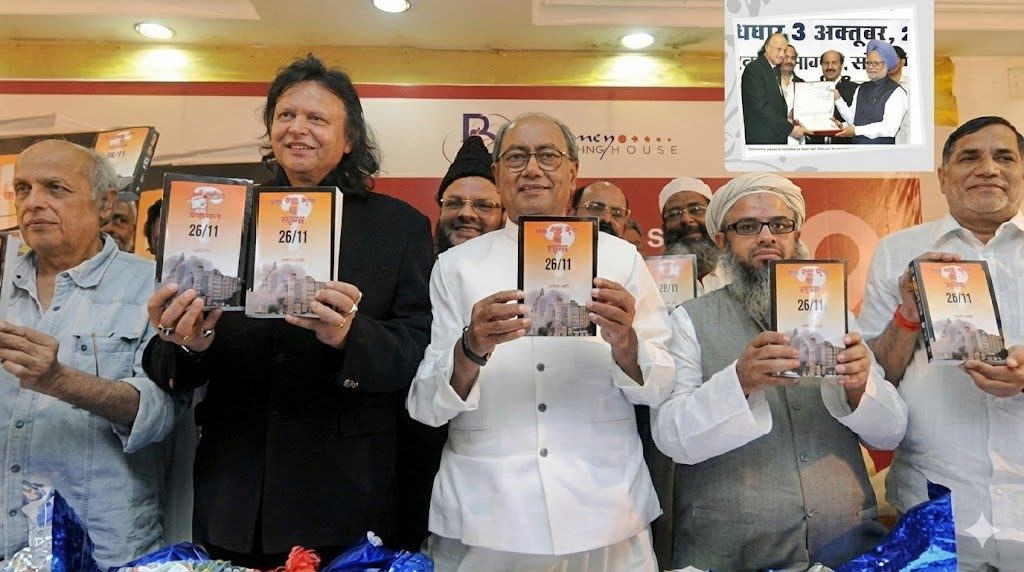
It was a surreal moment in statecraft. The ruling party’s heavyweights were lending credibility to a conspiracy theory that exonerated Pakistan and blamed “Hindu Terror” for the Mumbai attacks.
This narrative provided the perfect cover for the ISI, who could now point to India’s own leaders and say, “Look, even they believe it was an inside job.”
Act VI: The Hollow Guard (Emasculating the Military)
Behind the diplomatic weakness lay a darker reality: the government knew it could not fight a war even if it wanted to.
In 2012, a secret letter from Army Chief General V.K. Singh to the Prime Minister was leaked. It exposed the “critical hollowness” of the Indian military after years of neglect under the UPA.
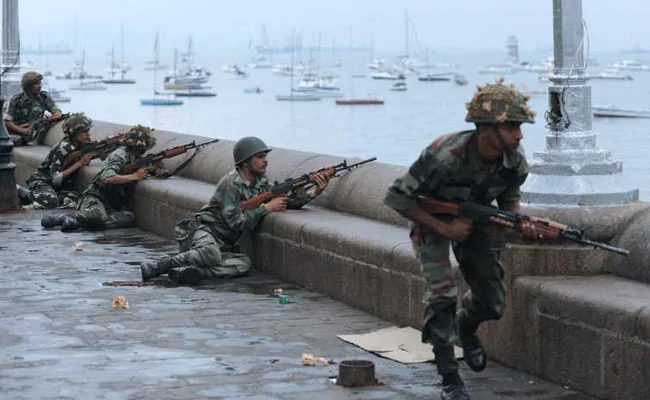
The facts were chilling:
- The Army’s tank regiments were “devoid of critical ammunition.” They couldn’t sustain a war for more than 3-4 days.
- 97% of the air defense system was “obsolete.”
- The Special Forces were “woefully short” of essential weapons.
Under Defense Minister A.K. Antony, procurement had come to a standstill. The “saintly” approach to avoiding corruption scandals meant no decisions were taken.
The sword arm of India had been allowed to rust, leaving the political leadership with no option but to accept humiliation when the enemy struck.
The Final Frame
The legacy of the UPA’s response to 26/11 is not just the tragedy of the lives lost; it is the tragedy of a state that forgot how to be a state.
By rejecting the military option, begging for justice through dossiers, and validating the enemy’s propaganda at Sharm el-Sheikh, the government institutionalized a culture of helplessness.
It established the image of India as a “Soft State” — a giant that could be cut with a thousand blades, and would only respond by checking if the bandages were clean.