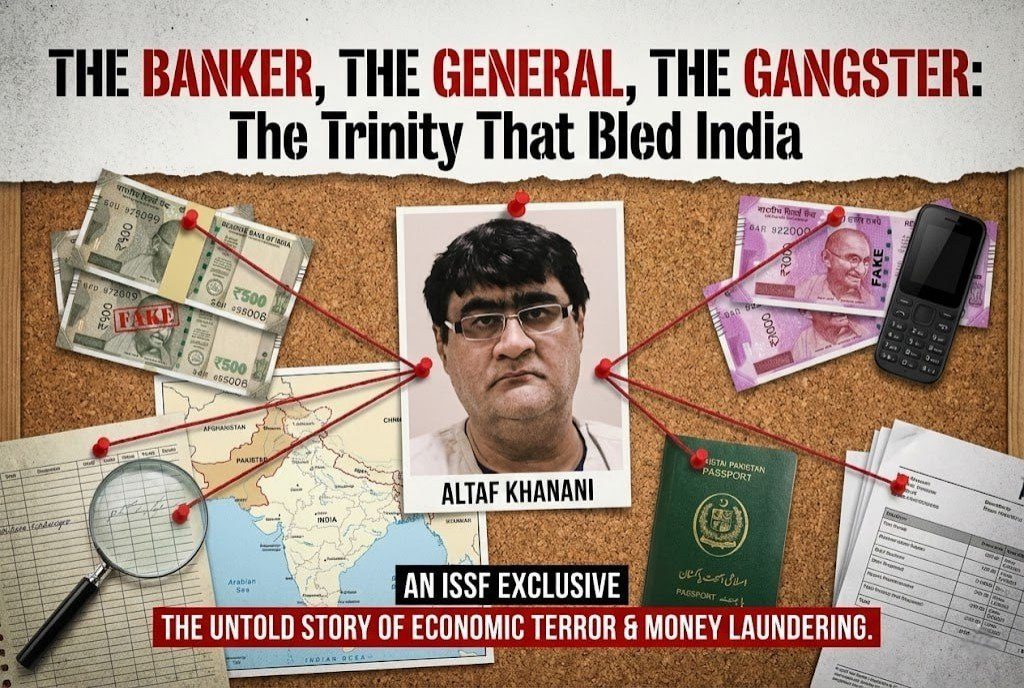
By ISSF Admin @mujifren
PROLOGUE: THE SILENCE OF GRAVITY
Karachi, December 2016.
Physics is impartial. When a body falls from the 8th floor of a building, the result is inevitable. But the death of Javed Khanani was not a matter of physics; it was a matter of geopolitics.
On a dusty afternoon in the upscale Mohammad Ali Society, Javed Khanani – one of the wealthiest men in South Asia – hit the pavement.
The police report was drafted with suspicious efficiency: Suicide. Financial stress.
The case was closed before the blood could be washed away.
But inside the intelligence headquarters in Delhi and Washington, the mood was not one of closure, but of recognition. Javed Khanani wasn’t just a businessman.
He was the Banker. And his death marked the violent dismantling of a “Trinity” that had waged a ten-year war against India – a war fought not on a battlefield, but in the ledgers of shadow banks and the ink of counterfeit currency.
The viral blockbuster Dhurandhar has brought this story to the screen. But the scriptwriters didn’t need to invent a villain.
They just had to look at the three men who formed the “Karachi Project”: The Banker who washed the money, The General who printed it, and The Gangster who moved it.
ACT I: THE BANKER (The Wallet)
Subject: Khanani & Kalia International (KKI)
Key Figures: Javed Khanani & Altaf Khanani
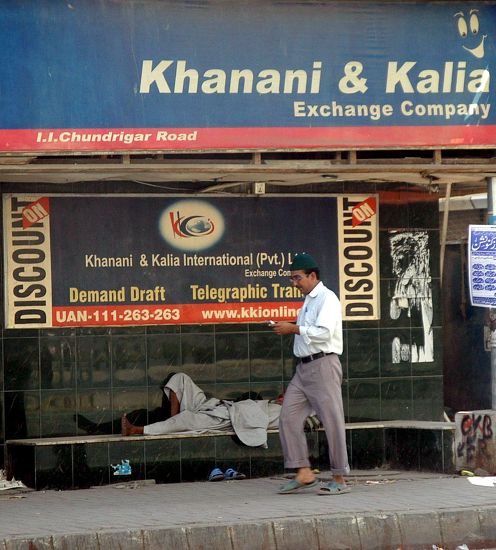
To understand how terror is funded, you must forget the image of a terrorist with a bag of cash. Modern terror looks like Khanani & Kalia International.
In the mid-2000s, KKI was the face of Pakistani finance. They controlled 40% of the country’s foreign exchange. They were the “McDonald’s of Money Exchange,” with branches in every major city. But this corporate facade hid the world’s most sophisticated Trade-Based Money Laundering (TBML) engine.
The “Mirror” Mechanism
How do you pay for a bomb blast in Mumbai when your money is in Karachi? You don’t send the money; you mirror it.
- The Process: A terror handler approaches KKI in Karachi with ₹1 Crore in Pakistani Rupees. KKI contacts their agent in Dubai or Mumbai. The agent in Mumbai releases the equivalent value in Indian Rupees to a sleeper cell.
- The Genius: No physical money crosses the border. No SWIFT code is triggered. The two agents simply balance their ledgers at the end of the day.
The DEA Sting (Operation Choke Point)
The fall of the Banker played out like a Hollywood thriller. In 2015, the US Drug Enforcement Administration (DEA) launched a sting. An undercover agent posed as a representative for a South American drug cartel, contacting Altaf Khanani (Javed’s brother).
- The Trap: The agent told Altaf they needed to clean drug money. Altaf didn’t blink. In secretly recorded meetings in Panama, he boasted of his ability to launder billions for “any entity,” including the Taliban and Al-Qaeda.
- The Arrest: On September 11, 2015, Altaf was arrested in Panama and flown to a Florida prison. The US Treasury designated the Khanani MLO a “Transnational Criminal Organization.”
With Altaf in a US cell and India’s 2016 Demonetization wiping out their stockpiles of fake currency, the “Banker” was insolvent. Javed Khanani’s “suicide” followed shortly after—a liquidation of a different kind.
ACT II: THE GENERAL (The Mint)
Subject: The ISI & Pakistan Security Printing Corporation
Key Figures: Major Iqbal & The “State” Apparatus

If the Banker provided the plumbing, the General provided the water.
For decades, the Inter-Services Intelligence (ISI) realized that they could not defeat the Indian Army conventionally. Instead, they chose “Economic Bleed.” The weapon was the Fake Indian Currency Note (FICN).
The movie Dhurandhar hints at “plates” and “ink.” The reality is far more damning. The fake notes flooding India weren’t “counterfeits” in the traditional sense. They were “Hostile Sovereign Issues.”
The Forensic Smoking Gun
In 2013-2014, the National Investigation Agency (NIA) presented forensic evidence from the Security Printing and Minting Corporation of India Ltd (SPMCIL) to the courts.
The findings were irrefutable:
- The Paper (The “Rag” Content): Commercial paper is made of wood pulp. Currency paper is made of cotton and linen rag. The FICN recovered in India was printed on 100% Cotton Rag — a substrate with the exact same GSM (Grams per Square Meter), pH value, and texture as the legal tender of Pakistan.
- The Ink (The “OVI”): The color-shifting ink (Optical Variable Ink) used on the notes is a restricted material sold by a Swiss company (SICPA) only to governments. The magnetic signature of the ink on the fake notes matched the specific “batch recipe” sold to the Pakistan Security Printing Corporation.
The “Third Shift”
Intelligence dossiers confirmed that the security presses in Malir Cantonment and Quetta were effectively running a “Third Shift.” By day, they printed Pakistani Rupees.
By night, they used the same sovereign-grade machines to print Indian Rupees. This was state machinery weaponized against a neighbor.
ACT III: THE GANGSTER (The Pipeline)
Subject: D-Company & The Logistics Network
Key Figures: Dawood Ibrahim, Aftab Batki, Yunus Ansari
You have the money (The Banker) and the product (The General), but you need a delivery system. This is where the Gangster enters.
The “Karachi Project” utilized the remnants of D-Company not for their muscle, but for their logistics.
The Supply Chain Manager: Aftab Batki
While Dawood is the face, intelligence agencies identify Aftab Batki as the CEO of the fake currency portfolio. Operating out of the Gulf and Karachi, Batki coordinated the movement of “bales” of currency.
The Nepal Corridor
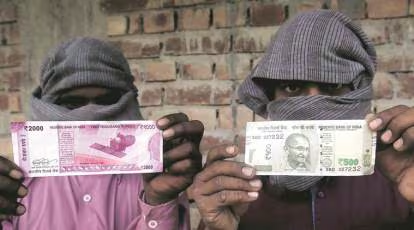
The movie accurately depicts the “Nepal Route.”
The key operative here was Yunus Ansari, son of a former Nepali minister.
- The Method: Fake notes were flown from Karachi to Kathmandu via the national carrier (PIA), often bypassing customs through diplomatic channels.
- The Distribution: From Kathmandu, the cash was moved by road to the porous borders of Raxaul (Bihar) and Sonauli (UP).
- The Economics: The syndicate operated on a 40-50% margin. A ₹1,000 fake note was sold to a distributor for ₹400-₹500. This massive profit margin was used to bribe border guards, purchase weapons, and fund the lifestyle of the D-Company lieutenants.
ACT IV: THE CONVERGENCE (26/11)
The 2008 Mumbai attacks were the moment the Trinity converged. It was the perfect storm of the Banker, the General, and the Gangster.
- The General Plan: The ISI (Major Iqbal) planned the operation and trained the ten terrorists.
- The Banker’s Funds: The money used to set up the VoIP accounts (Callphonex) in New Jersey – which allowed the handlers in Karachi to direct the slaughter in real-time – was routed through the financial channels established by the Khanani network.
- The Gangster’s Cash: David Headley, the American scout who mapped the targets, testified in court that Major Iqbal gave him bundles of Indian currency for his expenses. Forensic analysis later suggested these were high-quality fakes – the product of the General, laundered by the Banker, and distributed by the Gangster’s network.
ACT V: THE FALL AND THE FUTURE
The “Karachi Project” eventually collapsed under its own weight and external pressure.
- The General was exposed by the FATF (Financial Action Task Force), forcing Pakistan to the “Grey List.”
- The Banker was decapitated. Altaf is a convicted felon; Javed is dead.
- The Gangster has been forced into deeper hiding, squeezed by international sanctions.
Demonetization: The Final Strike
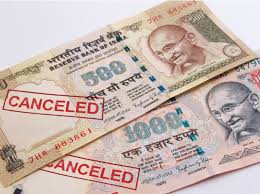
While controversial domestically, the 2016 demonetization of the ₹500 and ₹1,000 notes had one undeniable security impact: it rendered the specific “plates” held by the ISI useless.
The “Third Shift” had to stop because their product was no longer legal tender.
CONCLUSION: THE INVISIBLE WAR
The story of the Khanani brothers and their partners is a reminder that in the 21st century, warfare has evolved.
You don’t need to cross a border with tanks to destroy a nation; you can try to destroy its trust in its own money.
The Trinity is broken, but the intent remains. As long as the presses in Rawalpindi exist, and as long as shadow bankers are willing to move value for the highest bidder, the war depicted in Dhurandhar is not history — it is merely a paused chapter.
Sources & Verified References
- US Department of Treasury (Nov 12, 2015): Official sanctioning of the Altaf Khanani Money Laundering Organization. [Link to Archive]
- NIA Special Court Judgment (2014): Conviction in FICN cases citing SPMCIL forensic reports on “100% Rag Content” and “match with Pakistani legal tender.”
- Financial Action Task Force (FATF) Reports: Mutual Evaluation Reports on Pakistan (2016-2019) citing deficiencies in terror finance controls.
- David Headley Deposition (Feb 2016): Testimony before the Mumbai Special Court regarding funding from Major Iqbal.1
- United States vs. Altaf Khanani: Plea Agreement, Southern District of Florida (Case No. 15-20656-CR).