By: ISSF Strategic Desk | January 11, 2026
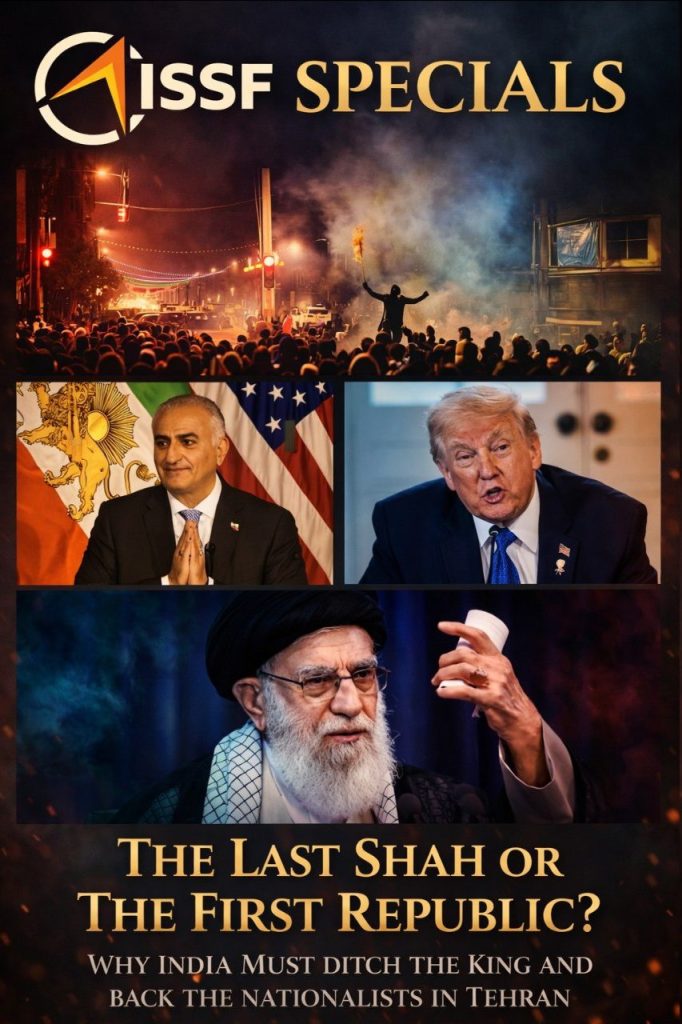
As of this morning, the Islamic Republic of Iran is not just trembling; it is undergoing a tectonic dissolution. The streets of Tehran are no longer arenas of protest but battlegrounds of a revolutionary endgame.
The Rial has cratered, trading at a catastrophic 1.45 million to the US dollar, and the Grand Bazaar – the historical heartbeat of Iranian revolutions – has shuttered its gates.
For the casual observer, the collapse of a theocracy that has exported ideology for forty years might seem like a victory. But for the strategic planners in South Block, New Delhi, this chaos presents a radioactive dilemma.
A ghost from the past, Reza Pahlavi, the exiled son of the deposed Shah, is poised to return, backed by Western intelligence and a wave of nostalgia.
Here is the hard truth that India’s strategic community must swallow: A restoration of the Monarchy is a strategic trap for India.
While the fall of the Mullahs is inevitable, replacing them with a CIA-groomed King risks turning Iran into a client state of the West – and by extension, a renewed ally of Pakistan.
India’s winning move lies in a “Third Way”: a Nationalist, Non-Monarchist Republic.
The Ghost of 1971: Why the King is No Friend of India
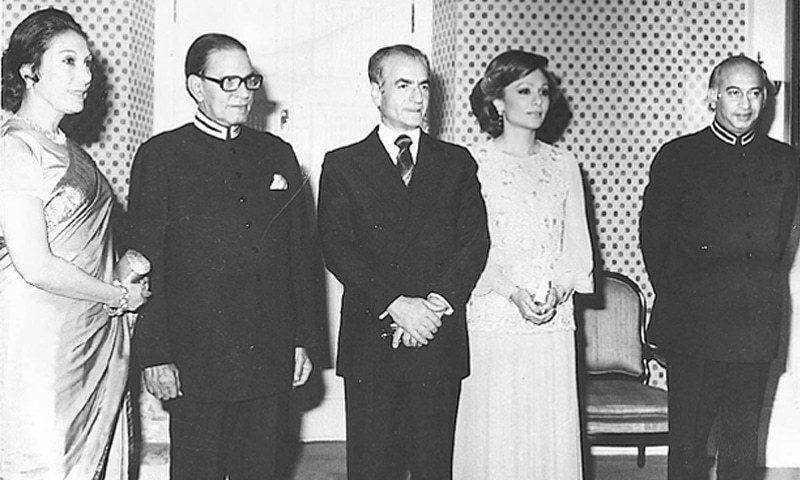
Memory is short in geopolitics, but India cannot afford amnesia. There is a romanticized notion in Indian circles that the pre-1979 Pahlavi era was a golden age of Indo-Iranian friendship. History suggests otherwise.
The Pahlavi dynasty was structurally aligned with Pakistan. During the 1965 and 1971 Indo-Pak wars, it was the Shah of Iran who provided “strategic depth” to the Pakistani Air Force.
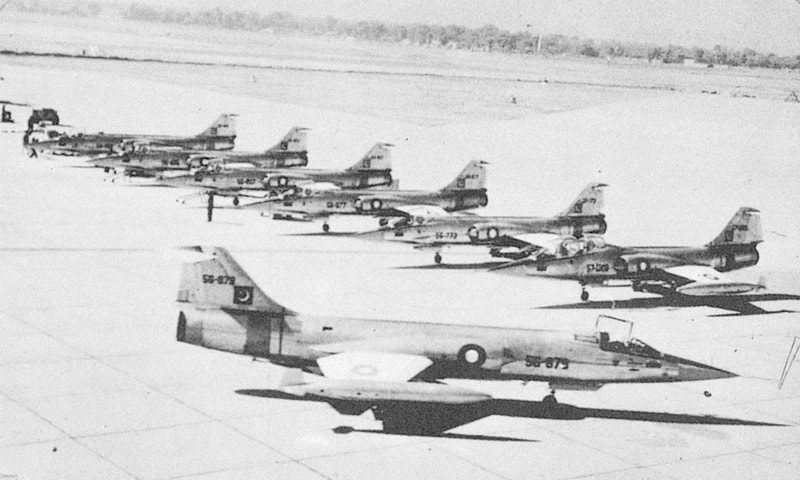
When Indian jets hammered Pakistani airfields, Pakistani Sabres found sanctuary in Iranian bases. The Shah supplied oil, ammunition, and diplomatic cover to Islamabad, famously declaring that Iran “would not accept any attempt to liquidate Pakistan”.
Reza Pahlavi, operating from the suburbs of Washington D.C., is beholden to the neoconservative establishment that nurtured him. If he ascends the Peacock Throne, Tehran will pivot to Washington.
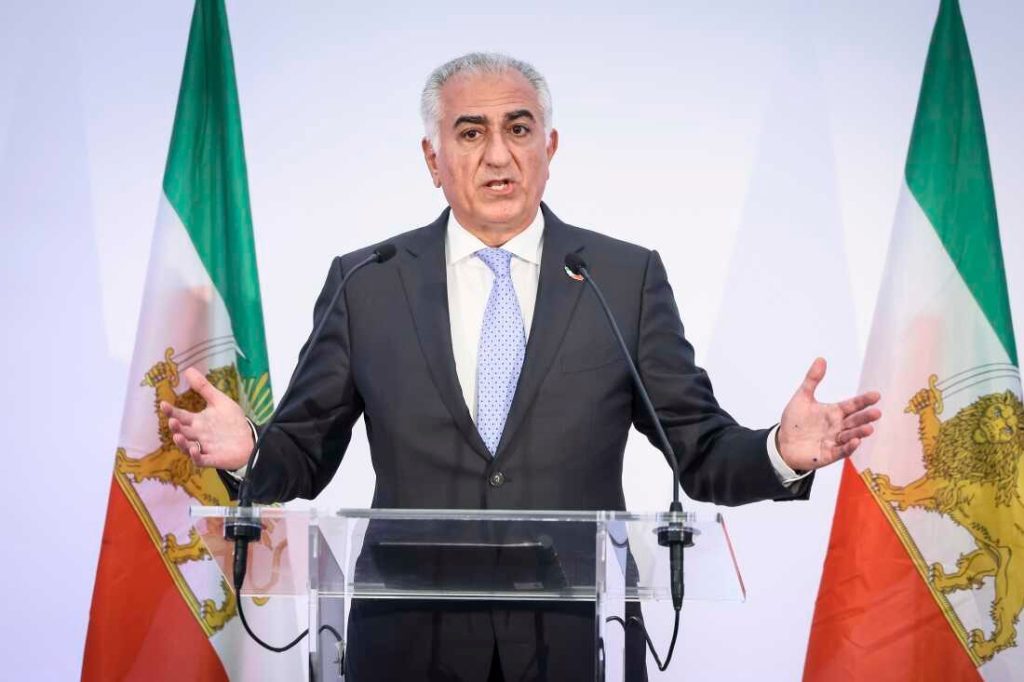
And Washington, as history shows, often views the region through the lens of stabilizing Pakistan.
A US-client Iran would be pressured to normalize ties with Islamabad, neutralizing the one geopolitical advantage India currently holds: the ability to squeeze Pakistan from the west.
The Asset at Risk: Chabahar and the Northern Route
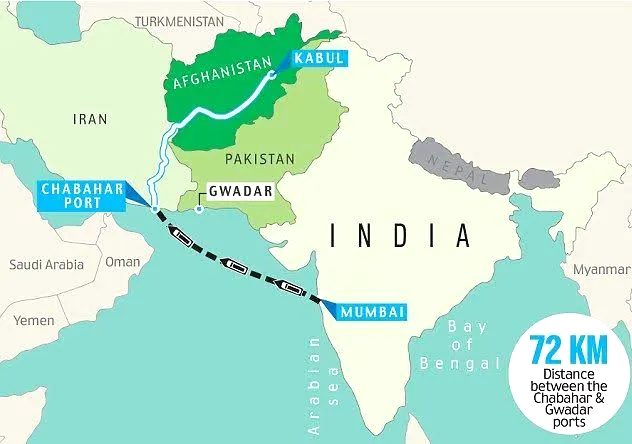
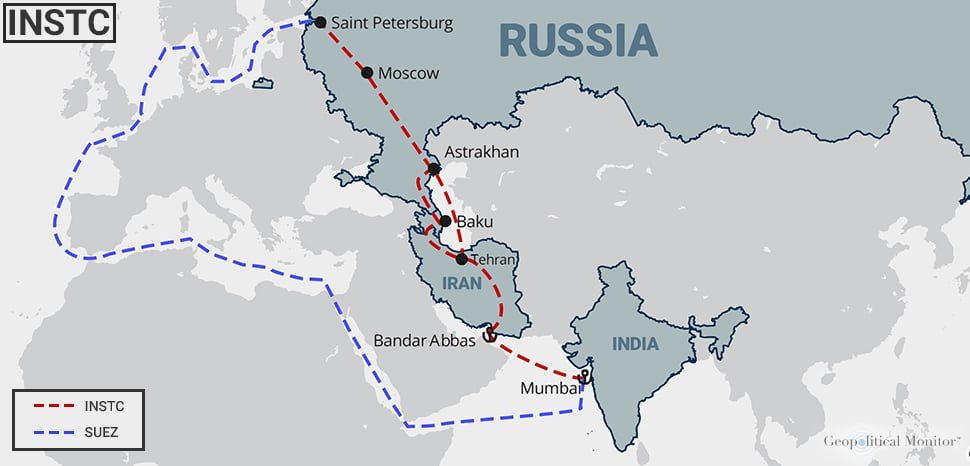
India’s grand strategy relies on bypassing Pakistan to access Afghanistan and Central Asia. The crown jewel of this strategy is the Chabahar Port and the International North-South Transport Corridor (INSTC).
Under the current, albeit crumbling, regime, India secured a hard-won 10-year operational agreement for the Shahid Beheshti terminal in 2024. The Mullahs, desperate for friends, allowed India strategic autonomy.
A pro-American monarchist government would have no such need.
If Tehran becomes a US client state:
- The Russia Link Snaps: The INSTC is designed to move goods from Mumbai to St. Petersburg via Iran. A US-aligned Tehran would be forced to enforce Western sanctions on Russia, effectively killing the corridor and India’s gateway to Eurasia.
- The Gwadar Merger: There is a distinct risk that US planners could push to integrate Chabahar with Pakistan’s Gwadar port under a unified “regional security” umbrella, stripping India of its exclusive strategic foothold.
The Anatomy of the Collapse: Why 2026 is Different
Why is the regime falling now? It wasn’t the students or the intellectuals who broke the state; it was the “12-Day War” of June 2025.
For decades, the Islamic Republic projected an image of invincibility. That myth evaporated last summer when Israeli F-35s, supported by US “bunker busters,” dismantled Iran’s air defense grid and nuclear infrastructure.
The regime fired hundreds of missiles in retaliation, most of which were intercepted.
The humiliation was total. The IRGC (Revolutionary Guards) were exposed not as “Guardians,” but as incompetent kleptocrats who could beat women in the streets but couldn’t defend the nation’s skies.
Compounding this is the “Aghazadeh” phenomenon. While ordinary Iranians sell their organs to buy food, the Aghazadehs (children of the elite) flaunt Ferraris and pet tigers on Instagram.

Figures like Sasha Sobhani, son of a former ambassador, brazenly told starving Iranians to “go die” if they couldn’t make money, while posting from luxury yachts
The moral rot hit rock bottom in late 2024 with the Astan Quds Razavi scandal. A pharmaceutical company owned by this “holy” charitable foundation distributed aluminium-contaminated dialysis solutions, killing at least 70 patients.
The regime protected the foundation, proving to the pious poor that their religion had been hijacked by a mafia.
The “Third Way”: The Case for a Nationalist Republic
If the Mullahs are the past and the King is a trap, what is the future? India must advocate for a Nationalist Republic.
This scenario involves the Artesh (Regular Army) stepping out of the shadows. Unlike the ideologically corrupt IRGC, the Artesh has maintained a reputation for professionalism and nationalism.
Reports from the current protests indicate Artesh units refusing to fire on civilians, signalling a split in the security apparatus.
A transition led by nationalist elements – potentially retaining President Masoud Pezeshkian as a transitional figurehead while purging the Supreme Leader’s office – serves India’s interests best.
- Nationalist, not Islamist: A nationalist Iran will naturally view Pakistan as a rival, not a “Muslim brother.” It will secure the Balochistan border, aiding India’s security.
- Non-Aligned: A republic born of internal struggle, rather than CIA imposition, will guard its sovereignty jealously. It will keep the INSTC open to balance against Western pressure, ensuring India’s trade route to Russia remains viable.
- Civilizational Ties: Stripped of Islamist ideology, a nationalist Iran is likely to embrace its pre-Islamic, “Aryavarta” heritage, strengthening cultural bonds with India rather than the Arab world.
Conclusion: The Tiger’s Move
The Persian Lion is wounded. As the vultures circle Tehran, New Delhi cannot be a passive spectator. The return of the Pahlavi dynasty promises a superficial glamour but hides a strategic chokehold that could suffocate India’s Eurasian ambitions.
India’s game must be to support the “Republic” over the “Crown.” We need an Iran that is stable, sovereign, and suspicious of Pakistan – not a glossy American outpost that turns its back on the region.
The fall of the Ayatollahs is an opportunity, but only if the successor is chosen by the streets of Tehran, not the think-tanks of Washington.