By Professor Habib Al Badawi
Introduction
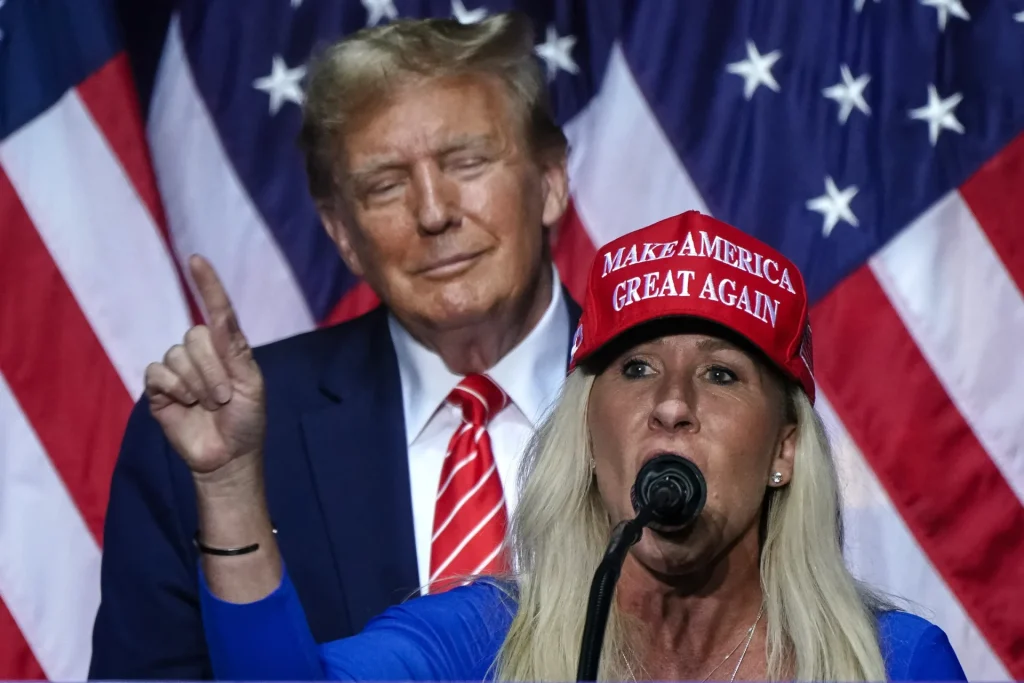
The rupture between Donald Trump and Marjorie Taylor Greene marks one of the most revealing confrontations inside the Republican Party since the rise of the Make America Great Again (MAGA) movement. What began as an alliance fueled by grievance politics and populist energy has evolved into a public collision that exposes the party’s unresolved identity crisis. Greene’s shift from Trump’s most visible loyalist to his sharpest critic reflects tensions between ideological purity, institutional responsibility, and competing visions for the conservative base.
As Greene presses for transparency in cases like the Epstein files, denounces foreign interventions, and adopts an increasingly independent posture on domestic issues affecting her constituents, she challenges the authority of the movement’s central figure. Trump’s response—mockery, accusations of betrayal, and political pressure—reveals the fragility of a leadership model built on personal loyalty rather than shared governance. Their conflict unfolds against the backdrop of a Republican electorate grappling with economic anxieties, cultural polarization, and the uncertain transition to a post-Trump era.
This confrontation reveals a movement testing its boundaries and renegotiating its hierarchy. The Trump-Greene rupture exposes a deeper struggle: whether the GOP’s future will be defined by allegiance to one leader or by competing interpretations of “America First.” In this political moment, the battle for the GOP’s soul has moved from quiet friction to open confrontation—and its outcome may reshape conservative politics for years to come.
The Rise and Fall of a MAGA Alliance
Congresswoman Marjorie Taylor Greene became a household name during the 2020 election cycle through divisive rhetoric, political stunts, and enthusiastic support of President Trump. Her trajectory through Congress embodied the combativeness that energized the MAGA base. Yet after growing disagreements with Trump during his second term, Greene announced in November 2025 that she would resign from Congress in January before her term expired, declaring it would not be fair to her northwest Georgia district to have them “endure a hurtful and hateful primary against me by the President we all fought for” while noting that “Republicans will likely lose the midterms.”
The split widened dramatically as Greene pushed relentlessly for the release of documents related to convicted sex offender Jeffrey Epstein. For months, she had publicly pressed Trump and congressional Republicans to release all files from two federal investigations. She helped force a House floor vote on the release—a process that drove Trump to reverse his position and led to near-unanimous support for the measure. But before Trump reversed course, he lashed out, calling her “Marjorie Traitor Greene,” and told reporters, “Something happened to her over the last period of a month or two where she changed politically.”
Greene defended her decision with unwavering conviction. “Standing up for American women who were raped at 14 and trafficked and used by rich, powerful men should not result in me being called a traitor and threatened by the President of the United States, whom I fought for,” Greene wrote. This statement crystallized the moral territory she was claiming—positioning herself as a defender of victims against powerful interests, even when that meant confronting the movement’s leader.
A Defiant Stand: Greene’s Challenge to Trump’s Authority
In November 2025, Greene stood outside the Capitol with some of the women who say they were abused by Epstein, embodying a new form of political theater that merged personal testimony with institutional accountability. “I’ve never owed him anything,” Greene said of the president. “But I fought for him and for America First. And he called me a traitor for standing with these women.” The image was striking—a once-loyal soldier of the MAGA movement now arrayed against its general, flanked by survivors rather than partisan warriors.
The cracks between Trump and Greene had grown over the preceding year. She called the war in Gaza a genocide, criticized Trump’s decision to bomb Iranian nuclear facilities, and pressed for expiring health subsidies to be extended, citing the threat of skyrocketing premiums for people in her district, including her own children. This was not the language of symbolic resistance. Greene was articulating specific policy critiques rooted in tangible constituent concerns—healthcare costs, military restraint, and transparency—that complicated the binary logic of loyalty the movement had come to expect. Moreover, she took these arguments not just to social media or right-wing outlets, but to mainstream venues like ABC’s The View. This strategic choice to engage beyond the conservative echo chamber signaled something more profound than a personal feud: Greene was attempting to redefine her political identity and broaden her coalition, speaking to audiences who might never have considered her message otherwise.
The Evolution of a Congresswoman
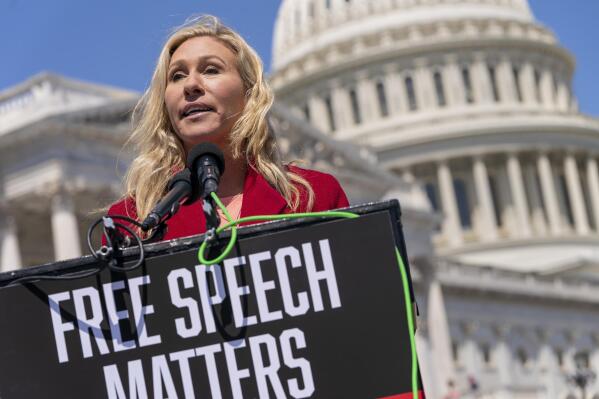
University of North Georgia professor Nathan Price, watching Greene’s appearance on The View, remarked with evident surprise, “I was thinking, if this was the first time I’d ever seen this person, it sounds like a normal congressperson from Schoolhouse Rock.” For some, this new persona is difficult to reconcile with the Greene many Americans first encountered—the congresswoman who embraced QAnon conspiracy theories, liked a post calling for violence against former House Speaker Nancy Pelosi, and heckled school shooting survivor David Hogg before he became a prominent political activist.
Even Trump publicly mused, “What happened to Marjorie?” Georgia Republican strategist Brian Robinson offers a measured interpretation. “I am open to the idea that she’s had a ‘road to Damascus’ moment, a conversion, that she sees the errors of the toxicity and wants something that’s better,” Robinson said, though he acknowledged the possibility might also reflect strategic calculation rather than genuine evolution.
Greene addressed claims that she had changed or abandoned the president. “Nothing has changed about me,” Greene told the hosts of The View. “I’m staying absolutely 100% true to the people who voted for me and true to my district.” This framing is crucial—Greene positions her shift not as abandonment of principle but as fulfillment of representational duty, suggesting that Trump’s positions have diverged from the core values their shared movement once embodied.
Robinson suggested the changes could reflect natural evolution for Greene, a former CrossFit gym owner from the Atlanta suburbs who entered Congress as a political outsider. “We love to elect outsiders to Congress,” Robinson observed. “They go to Congress with very little idea of how it works. And if at some point you’re like, ‘I want to do substantive things that make America better,’ then I’ve got to do this a little bit differently.” This learning curve—from ideological warrior to institutional operator—may explain some of Greene’s tactical adjustments without necessarily indicating a fundamental shift in worldview.
Alternatively, Robinson noted, Greene may be attempting to broaden her appeal as she weighs a bid for higher office. Trump claimed he showed Greene polling earlier in 2025 suggesting she would struggle in a race for Georgia governor or Senate. “Is she intentionally signaling to women, ‘The good old boys club ignores us, and I understand your struggles?’“ Robinson asked, highlighting the potential strategic dimension of Greene’s repositioning.
Both Robinson and Price emphasized that Greene’s evolution was more about style than substance. She has disavowed some controversial views, but not others, including the unproven assertion that widespread fraud upended the 2020 election result. The anti-interventionist, anti-elite principles that first propelled her to Congress remain core to her identity. “What she’s responding to is believing that the President has shifted on these issues,” Price argued, inverting the conventional narrative by suggesting Trump, not Greene, had strayed from foundational MAGA commitments.
Constituent Realities and Political Calculations
Greene’s evolution resonates differently at the grassroots level than in national media coverage. In Georgia’s 14th Congressional District, the narrative of dramatic transformation finds limited purchase among voters themselves. As chair of the Paulding County Republican Party, Ricky Hess spends considerable time in conversation with constituents, and he reports that local concerns remain fundamentally unchanged. “The issues that they want to talk about involve high property taxes, high health care costs, and whether or not their kids will be able to buy a house when they graduate,” Hess said, highlighting the bread-and-butter economic anxieties that dominate politics in this heavily working-class and rural stretch of Northwest Georgia.
Hess expressed confidence that Greene’s “America First” worldview resonates with her district’s demographic and economic profile. “She’s pretty tapped into what her constituents are wanting, and I have to believe that most of her actions are in service to that,” Hess said, offering a ground-level perspective that complicates the national media narrative of Greene as a wayward ideologue. From this vantage point, Greene’s focus on healthcare subsidies and affordability appears less like political apostasy and more like responsible representation.
Martha Zoller, who hosts a political talk radio show that airs across North Georgia, offered a more nuanced reading of local sentiment. In a November 2025 interview, she suggested the electorate was not yet settled in its judgment. “People are kind of reeling, if you want to know the truth,” Zoller said. “We haven’t had a lot of listeners discussing it because they’re waiting to see what happens.” This hesitation reflects the cognitive dissonance created when two figures previously understood as aligned suddenly become adversaries—voters need time to process competing loyalty claims and recalibrate their political identities accordingly.
Georgia political observers noted that Greene has been anything but a predictable politician, and her surprise resignation only reinforced that reputation for strategic unpredictability. Trump has reached truces with other politicians he’s feuded with, including Georgia Republican Governor Brian Kemp, suggesting that reconciliation remains theoretically possible. Yet Zoller identified a deeper question animating the conflict beyond mere personality clash: “I think that the big discussion we’re going to be having as Republicans over the next few years is what is the Republican movement once it’s not Trump?”
This observation cuts to the heart of the matter. Greene’s confrontation with Trump is not merely about Epstein files (Badawi, 2025), foreign policy, or healthcare subsidies—it is fundamentally about succession, institutional memory, and the ideological scaffolding that will support conservatism when its most dominant figure exits the stage. Zoller suggested it seems clear that Greene wants to be part of that discussion, positioning herself as a voice for principled populism that transcends individual leadership. Her resignation, however, complicates that ambition, raising questions about whether she can sustain political relevance outside institutional office or whether this marks the beginning of a strategic retreat.
The Mechanics of MAGA Discipline
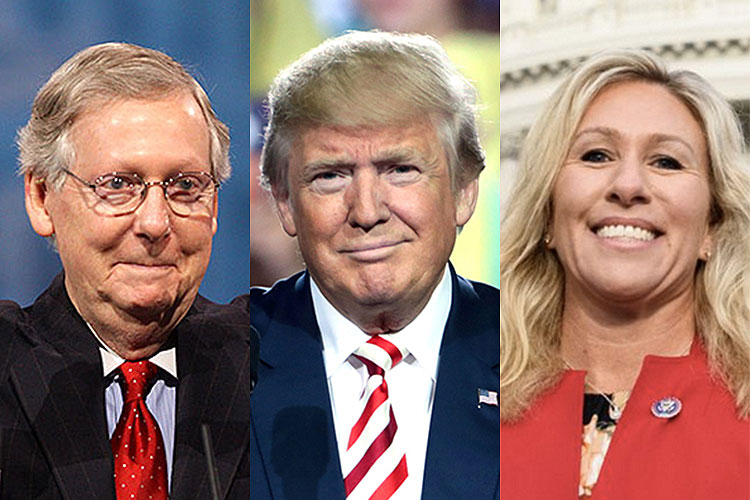
Greene’s trajectory exposes how the GOP enforces discipline through shaming, reward withdrawal, and threats rather than institutional processes. Her transparency push on the Epstein files, her non-interventionist criticism of military action, and her constituent-focused domestic stances reframed loyalty around ethics and service, puncturing the presumption that “America First” equals unquestioning presidential alignment. The conflict’s vocabulary—Trump’s renaming of her as “traitor,” his warnings about her political future backed by threatening poll data, and his public ridicule—demonstrates a leader-centric party treating policy deviation as identity betrayal, thereby transforming what might have been a routine policy dispute into a question of fundamental loyalty.
This disciplinary architecture has proven effective at maintaining short-term cohesion and deterring defection. The swift and brutal nature of Trump’s response to Greene’s independence sent an unmistakable message to other potential dissidents: crossing the leader carries severe personal and political costs. Yet the mechanism’s very effectiveness reveals its structural fragility. When loyalty becomes the paramount virtue, policy incoherence follows—the movement cannot easily accommodate principled disagreement or adapt to changing circumstances without fracturing its foundational mythology.
Greene’s resignation amplifies these stakes considerably. The direct cost is tangible: a narrower House margin and a self-inflicted media cycle focused on intra-party instability rather than legislative achievement or electoral preparation. But the indirect costs may prove more consequential over time. Greene’s stand signals a viable path for ambitious conservatives to challenge leadership through appeals to ethics, transparency, and localized economic concerns, effectively turning what might have been faceless institutional dissent into a compelling moral narrative with identifiable protagonists and clear stakes.
The operational lesson emerging from this episode is that unity based on personal loyalty fractures when it collides with issues that appeal to both anti-elite sentiment and protective instincts simultaneously. The Epstein files represented precisely this kind of issue—one that engaged both the anti-elite suspicion central to MAGA identity and the protective instincts that transcend partisan affiliation. Greene’s framing of her stance as a defense of trafficking victims made it extraordinarily difficult for Trump to sustain his “traitor” narrative without appearing callous or compromised. The party’s “discipline by spectacle” strategy is powerful in conventional partisan battles, but it struggles to maintain legitimacy when moral clarity cuts against loyalty demands.
Fractures in the America First Coalition
“America First” is fragmenting into incompatible interpretations, each claiming to represent the movement’s original vision. Three primary strands have emerged with increasing clarity:
Sovereignty-first emphasizes border control and industrial power. This strand prioritizes national autonomy, economic protectionism, and aggressive immigration enforcement as the core expressions of populist governance.
Ethics-first demands transparency and anti-elite accountability. This interpretation makes “America First” synonymous with exposing corruption, releasing government documents, and holding powerful institutions—including the presidency—accountable to citizens.
Restraint-first opposes foreign intervention and military escalation. This faction argues that true patriotism requires avoiding entangling foreign conflicts that drain resources better spent on domestic needs.
Greene’s repositioning foregrounds ethics and restraint alongside bread-and-butter affordability concerns, effectively making “America First” less leader-defined and more principle-based. This move toward ideological specification threatens Trump’s ability to define the movement’s boundaries through personal authority alone.
Trump’s counter-frame reasserts loyalty as the binding mythology, privileging movement unity and leader prerogative over contested policy specifics. In this conception, “America First” remains fundamentally about who defines it rather than what it substantively requires. The leader’s judgment on when to intervene militarily, which transparency battles to fight, and how to balance competing domestic priorities becomes the movement’s practical doctrine, with disagreement constituting not alternative policy judgment but defection from collective identity.
Foreign Policy Tensions
The schism hardens most visibly around foreign policy, where the tension between restraint and demonstration of strength produces competing security narratives. Greene’s position equates security with non-escalation and strategic disengagement, arguing that military interventions drain resources better spent on domestic needs while entangling the nation in conflicts that serve elite interests rather than working-class welfare. Trump’s position, by contrast, emphasizes decisive force as both a deterrent and an assertion of American power, arguing that strength preserves peace and that retreat invites aggression. Each side claims the mantle of genuine security concern, but they reason from fundamentally different premises about how power operates in international systems.
Transparency and Anti-Elite Politics
On anti-elite politics, the fault line runs between full disclosure and selective transparency. Greene’s posture makes anti-elite ethics procedural and institutional—release files, expose networks, and create accountability mechanisms that operate independently of leadership discretion. This approach treats transparency as a constitutional principle rather than a tactical resource. Trump’s position keeps anti-elite rhetoric tactical and discretionary, deployed strategically when it advances movement goals but contained when it threatens to constrain leadership flexibility or complicate necessary alliances. The difference is not whether elites warrant suspicion—both positions affirm that—but whether transparency should be systematized or instrumentalized.
Domestic Economics
On domestic economics, Greene’s attention to health premiums, property taxes, and housing affordability reframes populism from culture-first to household-first, creating friction with nationalized campaign imperatives that emphasize identity and values over material conditions. This shift potentially broadens the coalition by speaking to swing voters and moderate suburbanites who share economic anxieties but feel alienated by culture-war intensity. Yet it also risks diluting the movement’s mobilizational energy, which has historically derived more from cultural grievance and identity defense than from conventional economic policy proposals.
Segmentation of the Republican Base
The Trump-Greene conflict illuminates how the Republican base is reorganizing around distinct moral frames, information consumption patterns, and issue hierarchies. Rather than a simple left-right spectrum, the emerging segmentation reveals a complex topology of trust structures, with coalitional coherence depending less on shared policy positions than on compatible governance philosophies and leadership expectations.
MAGA Loyalists

MAGA loyalists define themselves through personal loyalty and leader-centric mobilization, responding primarily to betrayal narratives and cultural grievance. For this segment, Trump’s authority derives from his willingness to fight on their behalf and his refusal to submit to establishment constraints. Their core trigger is the perception that allies have defected or that the leader has been undermined by internal sabotage. The strategic risk inherent in this posture is policy incoherence—when loyalty supersedes substantive evaluation, the movement can find itself defending contradictory positions or following tactical shifts that undermine stated principles. The opportunity, however, lies in unmatched turnout energy and willingness to sustain mobilization across electoral cycles.
Populist Institutionalists
Populist institutionalists organize around transparency, military restraint, and household economics, responding to demands for anti-elite accountability and affordability. This emerging segment, which Greene increasingly represents, seeks to channel populist energy through institutional mechanisms rather than personal authority. Their core trigger involves perceived betrayal of procedural fairness or abandonment of working-class economic interests in favor of elite accommodation. The strategic risk is being outflanked as “soft” or institutionally captured, losing the authenticity that made populism compelling. The opportunity lies in enhanced credibility with independent voters and potential coalition expansion beyond the committed base.
Traditional Conservatives
Traditional conservatives emphasize party order and rule-based governance, responding to concerns about stability and fiscal prudence. For this segment, which has felt increasingly marginalized within the post-2016 GOP, the Trump-Greene conflict represents both threat and opportunity. The threat is that base disengagement accelerates as the party fractures into competing personality-driven factions. The opportunity lies in donor confidence and institutional legitimacy—if the party demonstrates capacity for internal correction and returns to governance emphasis, traditional conservative constituencies might reengage.
Libertarian Non-Interventionists
Libertarian non-interventionists organize around civil liberties and opposition to military intervention, responding to concerns about government overreach and surveillance. Greene’s foreign policy positioning and transparency demands resonate strongly with this segment, which has historically felt homeless in a GOP increasingly defined by culture-war combat. The strategic risk is isolation—libertarian priorities often lack mass mobilization power and can be sidelined when partisan combat intensifies. The opportunity, however, lies in coalition bridges on transparency and restraint issues that could unite disparate factions against common opponents.
Suburban Moderates
Suburban moderates prioritize tempered rhetoric and competence, responding to concerns about cost of living and safety. For this segment, the Trump-Greene spectacle represents precisely the kind of intra-party warfare that reinforces negative perceptions about Republican governance capacity. The strategic risk is alienation by spectacle—when the party appears consumed by personality conflicts and purity tests, suburban voters gravitate toward alternatives promising stability. The opportunity lies in swing margins—if Republicans can demonstrate seriousness about kitchen-table economics and institutional functionality, this segment becomes electorally decisive.
Greene’s district behavior underscores a crucial dynamic: even in strongly Trump-aligned areas, voters prioritize affordability, property taxes, and accessible housing when making concrete political demands on their representatives. This creates a pathway for ethics-plus-economics messaging that does not reject populism but grounds it in tangible household benefits rather than purely symbolic combat. The challenge for any faction seeking to consolidate this coalition involves maintaining the emotional intensity and anti-establishment energy that characterizes MAGA mobilization while channeling it toward specific policy deliverables that address material conditions.
Strategic Scenarios and Future Trajectories
Three plausible scenarios emerge from this rupture, each carrying distinct implications for party coherence, electoral performance, and long-term ideological development.
Scenario 1: Reconciliation and Reabsorption
This scenario involves a negotiated détente with mutual face-saving and selective policy alignment. Trump and Greene could reach an understanding that allows both to claim vindication—Trump demonstrating his capacity for magnanimity and coalition management, and Greene securing commitments on transparency or constituency concerns that justify her confrontation. The mechanism would require consistent messaging on key issues, with transparency receiving limited support and Greene moderating her public challenges to Trump’s leadership.
Implications: This scenario preserves short-term cohesion and minimizes immediate electoral damage, preventing the special election from becoming a referendum on internal party warfare. However, the brittleness persists beneath the surface. If ethics disputes re-emerge or if Greene perceives Trump backsliding on commitments, the conflict could reignite with even greater intensity.
Key Indicator: Watch whether both can maintain consistent messaging on transparency initiatives with clearly defined boundaries that prevent future escalation.
Timeline: This could emerge quickly—within weeks or months—if both parties perceive immediate electoral necessity.
Scenario 2: Fragmentation and Realignment
This scenario involves competing blocs—loyalists, institutionalists, and traditionalists—engaging in sustained competition over primaries and agenda-setting. Rather than resolving into reconciliation, the party accepts and institutionalizes its internal diversity, with different factions controlling different geographic and institutional spaces. This produces message incoherence at the national level but enables policy innovation at local and state levels, as different approaches compete for validation.
Implications: The electoral implications are mixed. Potential vote-splitting risks in primaries could produce weaker general election candidates, but localized authenticity gains might compensate by mobilizing constituencies previously alienated by one-size-fits-all messaging.
Key Indicator: Watch for contested endorsements, where Trump and other prominent figures back different candidates in the same race, and divergent foreign policy planks that acknowledge the movement’s internal disagreements rather than papering over them with vague formulations.
Timeline: This unfolds over a longer horizon, requiring multiple electoral cycles for new coalitional boundaries to stabilize.
Scenario 3: Transformational Moderation (Hybridization)
This scenario involves the development of a codified platform that synthesizes sovereignty concerns, ethics and transparency commitments, and fiscal competence, reducing leader prerogative in favor of institutional procedures. This represents the most structurally significant departure from personalist leadership, creating durable mechanisms that outlive individual careers.
Implications: Demonstrating capacity for self-correction and institutional learning could restore confidence among swing voters and donor networks skeptical of chaos. However, this approach risks demobilizing maximalist elements energized precisely by the movement’s combative rejection of institutional constraints.
Key Indicator: Watch for formal procedural commitments such as document release protocols, enforceable party rhetoric standards, and affordability-first legislative packages that receive sustained institutional support regardless of leadership preferences.
Timeline: Transformation demands the longest timeline, requiring institutional investment and cultural shifts that typically span years rather than months.
A Movement Confronts Its Future
The Trump-Greene rupture is not simply a personal falling-out between two prominent political figures. It represents a fundamental stress test of the Republican Party’s post-2016 identity, forcing to the surface questions that have simmered beneath tactical unity: What holds the coalition together when personal loyalty conflicts with principle? Can a movement built around anti-establishment energy transition to responsible governance? Does “America First” describe a coherent policy framework or a collection of grievances unified only by opposition to a common enemy?
Greene’s transformation from loyalist to critic demonstrates that even within the MAGA core, fissures exist between those who define the movement through personal attachment to Trump and those who understand it as a set of principles that can be invoked against any leader who strays. Her willingness to stand with Epstein survivors, criticize military interventions, and prioritize constituent economic concerns over partisan messaging reveals an alternative conception of populist authenticity—one rooted in specific ethical commitments rather than unquestioning loyalty.
Trump’s response, characterized by personal attacks and threats of political destruction, reveals the limits of a leadership model dependent on fear and favor. While effective at maintaining discipline in the short term, this approach cannot accommodate the substantive policy debate necessary for a governing party. Every disagreement becomes a loyalty test; every challenge to leadership judgment becomes an existential threat. The result is a movement perpetually on the edge of fracture, held together by the charisma and combativeness of a single figure but unable to develop the institutional resilience required for long-term political success.
The implications extend beyond Trump and Greene as individuals. Their conflict previews the succession struggle that will inevitably unfold as Trump ages and other ambitious figures seek to claim his mantle. Will the party unite around a single Trump-endorsed successor, or will competing factions emerge, each claiming to represent the authentic MAGA vision? Greene’s challenge suggests the latter is more likely—that the movement will fragment into distinct currents emphasizing different elements of the America First coalition, competing for dominance through both electoral and rhetorical combat.
For Republican voters, particularly those in working-class and rural communities that have formed the backbone of MAGA support, this conflict creates genuine cognitive dissonance. Many saw Trump and Greene as fighting the same battle on the same team. The spectacle of their mutual denunciation forces a choice that many would prefer to avoid: whose version of America First is authentic? This choice has practical consequences for how voters evaluate candidates, allocate resources, and engage in party politics going forward.
The episode also raises profound questions about political rhetoric and responsibility. When leaders deploy terms like “traitor” against former allies, when they mobilize supporters against internal dissenters with the same intensity previously reserved for political opponents, they risk normalizing levels of conflict that democratic institutions struggle to contain. Greene’s public statements about receiving threats following Trump’s attacks highlight this danger—the line between political combat and physical intimidation grows disturbingly thin when leaders signal that certain individuals deserve punishment for disloyalty.
Concluding Remarks
The Trump-Greene confrontation crystallizes a choice that will define Republican politics for the next decade: whether the party is fundamentally a vehicle for Donald Trump’s personal political ambitions or a coalition united by shared principles that transcend any individual leader. Greene’s defiance and resignation suggest that at least some significant figures within the MAGA movement believe the latter—that America First describes commitments to transparency, restraint, and working-class economic security that can be invoked even against the movement’s founder when he appears to stray from them.
The outcome of this conflict remains uncertain. Reconciliation is possible—Trump has made peace with other prominent critics when tactical necessity demanded it. Fragmentation seems equally plausible—the party could splinter into competing factions, each claiming authentic inheritance of the populist mantle. Transformation, while least likely, would represent the most consequential outcome—a party that successfully transitions from personalist leadership to institutional governance, maintaining populist energy while channeling it through durable structures.
What seems clear is that the old model—unquestioning loyalty enforced through public shaming and threat of ostracism—has reached its limits. Greene’s willingness to defy Trump on issues of principle and her ability to frame that defiance in terms resonant with core MAGA constituencies demonstrate that the movement has matured beyond simple leader-follower dynamics. Whether this maturation produces a more stable and effective party or accelerates its fragmentation into warring tribes remains to be determined.
For now, the battle for the GOP’s soul continues, with stakes that extend far beyond the immediate political fortunes of two prominent figures. The question is not merely who wins this confrontation, but what kind of party and movement emerges from it—one capable of self-correction and institutional development, or one locked in permanent internal warfare, consuming its own energy in endless purity tests and loyalty trials. The answer will shape not just Republican prospects in coming elections but the very nature of American conservatism for a generation.
References
Abbott, C. (2025, November 21). Trump calls Marjorie Taylor Greene’s resignation ‘great news.’ The Guardian. https://www.theguardian.com/us-news/2025/nov/21/trump-marjorie-taylor-greene
Badawi, H. (2025, November 18). The Epstein files fallout: Donald John Trump vs. Marjorie Taylor Greene in a MAGA civil war. LinkedIn-IDR Newsletter. https://www.linkedin.com/pulse/epstein-files-fallout-donald-john-trump-vs-marjorie-taylor-al-badawi-qfhuf/
Churchwell, S. (2018). Behold, America: The history of “America First”. Smithsonian Magazine. https://www.smithsonianmag.com/history/behold-america-american-dream-slogan-book-sarah-churchwell-180970311/
CNBC. (2025). ACA enhanced subsidies ending may raise premiums. https://www.cnbc.com/2025/05/aca-subsidies-expiring-healthcare-costs.html
Cybersecurity and Infrastructure Security Agency (CISA). (2020). Joint statement on the 2020 election’s security. https://www.cisa.gov/news/2020/11/12/joint-statement-2020-election-security
Doyle, K., & News Agencies. (2025, November 22). Major MAGA figure Marjorie Taylor Greene resigns after Trump clash. Al Jazeera. https://www.aljazeera.com/news/2025/11/22/major-maga-figure-marjorie-taylor-greene-resigns-after-trump-clash
Encyclopaedia Britannica. (2025). David Hogg. https://www.britannica.com/biography/David-Hogg
Encyclopaedia Britannica. (2025). Donald Trump. https://www.britannica.com/biography/Donald-Trump
Encyclopaedia Britannica. (2025). Marjorie Taylor Greene. https://www.britannica.com/biography/Marjorie-Taylor-Greene
Georgia Public Broadcasting. (2025, November 21). After breaking with Trump, Marjorie Taylor Greene will resign. GPB News. https://www.gpb.org/news/2025/11/21/after-break-trump-marjorie-taylor-greene-will-resign
Governor of Georgia. (2025). About Governor Brian P. Kemp. https://gov.georgia.gov/about-us/about-governor-brian-p-kemp
Holoyda, B. J. (2022). QAnon: A modern conspiracy theory. Journal of the American Academy of Psychiatry and the Law, 50(1), 7–15. https://doi.org/10.29158/JAAPL.210053-21
Murphy Marcos, C. (2025, November 21). Marjorie Taylor Greene to resign from Congress in January amid fallout with Trump. The Guardian. https://www.theguardian.com/us-news/2025/nov/21/marjorie-taylor-greene-resigns
Parker, C. S., & Blum, R. M. (2025). Exploring the motivations of the MAGA movement. Oxford Academic. https://academic.oup.com/book/60493/chapter/522480384
POLITICO. (2025). US bombed Iranian nuclear sites, Trump says. https://www.politico.com/news/2025/06/21/us-bombed-iranian-nuclear-sites-00416403
Price, M. L., Mascaro, L., & Amy, J. (2025, November 21). Rep. Marjorie Taylor Greene of Georgia, a former Trump loyalist, says she is resigning from Congress. Associated Press / ABC News. https://abcnews.go.com/US/wireStory/rep-marjorie-taylor-greene-georgia-former-trump-loyalist-127772498
Reuters. (2025, November 22). U.S. lawmaker Marjorie Taylor Greene to resign after rupture with Trump. Reuters News. https://www.reutersconnect.com/item/us-lawmaker-marjorie-taylor-greene-to-resign-after-rupture-with-trump
Rocha, A., & Williams, R. (2025, November 21). Georgia congresswoman Marjorie Taylor Greene says she will resign in January. Georgia Recorder. https://georgiarecorder.com/2025/11/21/georgia-congresswoman-marjorie-taylor-greene-says-she-will-resign-in-january/
U.S. Department of Justice. (2025). Epstein files transparency review. https://www.justice.gov
U.S. House of Representatives. (2025). Biography of Nancy Pelosi. https://pelosi.house.gov/biography
UN News. (2025). Two years of Gaza-Israel war bring indescribable pain. https://news.un.org/en/story/2025/10/1166045
Williams, R. (2025, November 25). U.S. Rep. Marjorie Taylor Greene’s resignation could lead to ‘dominos falling’ under the Gold Dome. Georgia Recorder. https://georgiarecorder.com/2025/11/25/u-s-rep-marjorie-taylor-greenes-resignation-could-lead-to-dominos-falling-under-gold-dome/
Yahoo News. (2025, November). Marjorie Taylor Greene quits Congress after bitter fallout with Trump. Yahoo News. https://www.yahoo.com/news/articles/marjorie-taylor-greene-quits-bitter-015457696.html