By Professor Habib Al Badawi
| “This paper examines the elevation of Sheikh Khalid bin Mohammed bin Zayed Al Nahyan to the position of Crown Prince of Abu Dhabi as an exercise in strategic regime design rather than hereditary inevitability. Drawing on verified Reuters reporting from 2023–2026, the analysis situates the succession within three interlocking structural shifts: the synchronization of dynastic transition with post-oil economic diversification; the institutionalization of managed, knowledge-preserving power transfer; and the consolidation of Abu Dhabi as an autonomous strategic pole within a multipolar Middle East. The concurrent restructuring of sovereign wealth architecture, Mubadala’s artificial intelligence investment strategy, and ADQ’s logistics acquisitions are interpreted not as discrete financial decisions but as mutually reinforcing pillars of a unified theory of twenty-first-century small-state statecraft” – Prof. Habib Badawi |
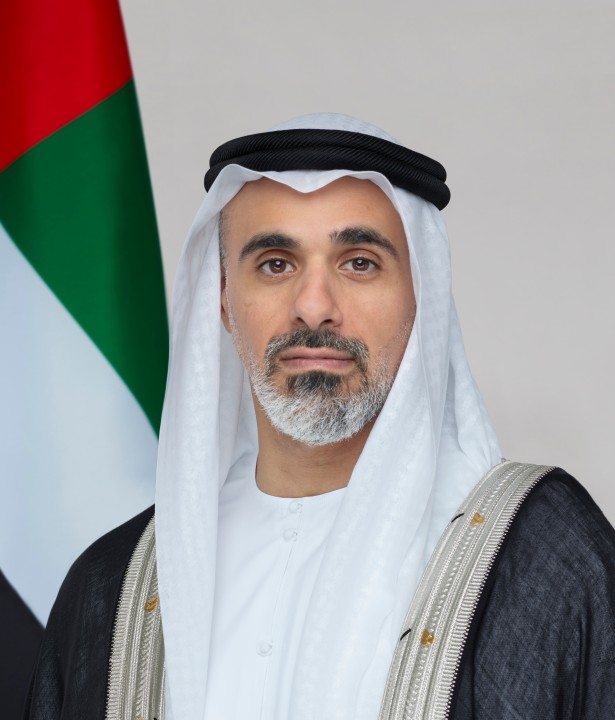
The appointment of Sheikh Khalid bin Mohammed bin Zayed Al Nahyan as Crown Prince of Abu Dhabi represents far more than a dynastic designation. It reflects a deliberate strategy to secure regime continuity, modernize the economy, and strengthen the UAE’s standing in a fractured international order. To interpret this elevation as hereditary inevitability is to misread the structural logic that governs one of the most consequential states of Gulf. What is unfolding in Abu Dhabi is a long-term exercise in statecraft — one that links political authority, sovereign investment, and regional diplomacy into a unified strategy.
According to Reuters, UAE President Mohammed bin Zayed Al Nahyan formally appointed his eldest son as Crown Prince in March 2023, simultaneously elevating key family members to senior governing roles — a coordinated restructuring of the Emirati leadership architecture.¹
This move clarified succession within the federation’s most powerful emirate and positioned Sheikh Khalid as the future ruler of Abu Dhabi and, by political convention, the likely future President of the United Arab Emirates.
Yet the significance of the moment extends well beyond the individual involved. The restructuring signals an elite consensus carefully engineered to prevent the intra-dynastic fractures that have destabilized other monarchies in the region, while transmitting a message of institutional predictability to international investors, strategic partners, and allied governments.
- Succession as Strategic Statecraft
Unlike abrupt or contested leadership transitions elsewhere in the Middle East, the UAE’s succession process reflects a model of institutionalized dynastic governance that is rare in the broader Arab political landscape. The March 2023 reshuffle was not simply the elevation of one man — it was the rebalancing of an entire governance architecture.
Senior brothers were simultaneously assigned to top federal and emirate roles, ensuring that authority was redistributed rather than narrowly concentrated. This distinction matters enormously. Concentrating power in a single figure has historically bred resentment and internal fracture in Gulf monarchies; the Emirati model instead distributes authority among senior family members to sustain elite cohesion.
Reuters reporting confirms that Sheikh Mohammed named his brother Sheikh Mansour as UAE Vice President alongside Dubai’s ruler, while appointing Sheikh Tahnoun and Hazza bin Zayed as Deputy Rulers of Abu Dhabi.¹ By keeping “some power-sharing balance, but only within (Abu Dhabi’s) Al Nahyan clan,” as Cinzia Bianco of the European Council on Foreign Relations observed at the time, the restructuring prevented the exclusive centralization that external adversaries or internal discontents might exploit.
From a geopolitical perspective, the appointment accomplished three parallel objectives. It resolved the question of succession before any crisis could exploit uncertainty — a lesson drawn, in part, from the contested transitions observed elsewhere in the region. It reinforced elite consensus management within the Al Nahyan ruling structure.
And it transmitted a signal of institutional continuity to the global investor community at a moment when sovereign wealth flows and foreign direct investment have become instruments of geopolitical competition in their own right. In a world where political risk shapes capital allocation decisions, the UAE’s ordered, managed transition is itself a competitive advantage.
- Generational Transition and the Security State
Before ascending to the crown, Sheikh Khalid built his credentials through immersion in national security administration and strategic governance — portfolios that in the Emirati model are inseparable from regime durability.
His preparation has encompassed intelligence operations, internal security coordination, and strategic technology acquisition — a trajectory characteristic of a broader Gulf trend in which heirs to power are prepared not through ceremonial duties or diplomatic visibility, but through control of the institutions that define the state’s coercive and informational capacity.
As Reuters noted in its 2023 coverage, MBZ had been grooming his son “in positions of authority in security – including intelligence – economy and governance.”¹ This operational preparation is deliberate. The UAE’s leadership recognizes that the durability of small states in a volatile regional environment depends less on military mass than on institutional cohesion, intelligence depth, and the ability to shape the information environment.
The succession is therefore best understood not as a transfer of symbolic authority but as a handover of operational command — one that ensures Sheikh Khalid inherits not just the title of ruler but the intelligence and security institutions that define how Abu Dhabi governs internally and projects power abroad. The security-state dimension of his preparation ensures that the transition preserves not just the form but the substance of centralized strategic control.
- Sovereign Capital as Geopolitical Instrument
Perhaps the most consequential dimension of the post-succession order is the reorganization of Abu Dhabi’s sovereign wealth architecture. A sweeping January 2026 restructuring placed major sovereign assets under a new investment framework directly associated with the Crown Prince.
Reuters reported that Abu Dhabi’s newest sovereign fund, L’imad Holding, took control of peer ADQ in a major wealth reshuffle, a structural shift that effectively centralizes decision-making authority over hundreds of billions of dollars in state assets.² Sheikh Khalid was appointed Chairman of L’imad, placing under his direct control a portfolio encompassing Etihad Airways, Abu Dhabi Ports, Etihad Rail, and PureHealth, among over 250 group subsidiaries.
These are not merely financial maneuvers. For mid-sized states like the UAE, sovereign wealth functions as a substitute for the hard power that demographic and military scale cannot provide — a lever of influence that operates through boardrooms and supply chains rather than battalions.
By centralizing these assets under an institutional framework tied to the Crown Prince’s authority, Abu Dhabi is not simply rationalizing its investment portfolio; it is constructing a tool of strategic statecraft.
Mubadala, the emirate’s $330 billion sovereign wealth fund, has simultaneously positioned itself at the frontier of transformative technology. Reuters reported in January 2026 that Mubadala CEO Khaldoon Al Mubarak, speaking at the World Economic Forum in Davos, identified artificial intelligence and robotics as the fund’s primary investment focus, describing the convergence of these fields as likely to fundamentally reshape manufacturing and industry.³ Investment in AI and robotics simultaneously advances national security capabilities, reshapes domestic labor markets, and anchors long-term industrial diversification.
ADQ’s acquisition of a majority 58% stake in logistics firm Aramex in March 2025, confirmed by Reuters, is similarly indicative.⁴ Physical logistics infrastructure and data flows represent dual-use strategic assets in an era where supply chain control and information network dominance intersect.
Aramex, with operations in over 65 countries and 800,000 square meters of global warehousing, provides Abu Dhabi with a genuinely global logistics footprint.
The broader ambition is unmistakable. Abu Dhabi is engineering a transition from hydrocarbon dependency toward a model in which sovereign capital, deployed across technology, logistics, real estate, and financial sectors, generates the revenues and leverage that oil once provided.
This diversification is not merely economic prudence — it is the prerequisite for the UAE’s continued geopolitical relevance in a world that is, however unevenly, decarbonizing. The succession carries embedded within it an entire theory of post-oil statecraft.
- Regional Context and the Logic of Leadership Stability
Sheikh Khalid’s elevation occurs against a backdrop of accelerating Gulf realignment. Growing divergences between Saudi Arabia and the UAE have emerged across energy policy, regional political strategy, and geopolitical posture. As the two largest Arab economies pursue partially overlapping, partially competing visions of post-oil transformation, the UAE’s internal coherence becomes a strategic asset.
Riyadh, by contrast, faces ongoing questions about the concentration of authority around Crown Prince Mohammed bin Salman and the management of elite dissent. Abu Dhabi’s succession process, conducted with relative openness and institutional order, presents a sharply different face to investors and allied governments.
In this environment, leadership predictability becomes a form of strategic capital. Allies and investors make long-term commitments based on their assessment of future governance continuity. The appointment of Sheikh Khalid, accompanied by the simultaneous formalization of the broader leadership architecture, signals that the Abu Dhabi model of autonomous foreign policy, U.S. security partnership, and multi-vector diplomatic alignment — the deliberate maintenance of working relationships across competing great powers and regional blocs — will persist across the generational transition.
Multi-vector alignment requires more than diplomatic skill; it requires durable institutions, experienced personnel, and consistent strategic memory to sustain across generations. The UAE’s cultivation of relationships across Washington, Beijing, New Delhi, and Brussels ensures that Abu Dhabi is never hostage to the strategic preferences of any single patron. Succession, in this context, is the mechanism through which strategic culture is transmitted from one generation to the next.
There are also dimensions of continuity that bear closer scrutiny. The legacy of Mohammed bin Zayed — architect of the Abraham Accords, manager of the UAE’s complex relationships with the United States and with regional powers including Iran and Turkey — represents a foreign policy framework of considerable sophistication.
The swift publication in early 2025 of an official photographs showing him meeting U.S. Senator Lindsey Graham served as a deliberate signal of continuity — a reminder that in contemporary diplomacy, image management and information control are themselves instruments of statecraft.
- The Emirati Governance Model in Global Perspective
The leadership restructuring of 2023, viewed in conjunction with the sovereign wealth reorganization of 2026 and the technology investment strategies now underway, reveals the contours of a distinctive Emirati governance model that merits serious analytical attention.
Political legitimacy is grounded in dynastic continuity — the Al Nahyan ruling structure provides the stability that electoral uncertainty and republican transitions cannot. Governance, however, is increasingly technocratic in character, staffed by professionals drawn from international educational institutions and state enterprise experience rather than ideological movements.
Scholars of Gulf politics have increasingly described such arrangements as a form of “authoritarian modernization,” in which economic reform and institutional development proceed without political liberalization (Hertog 2010; Davidson 2012; Hvidt 2011). The combination produces a governance model — technocratic in administration, authoritarian in structure — that has proven resilient across decades of regional instability.
Economically, sovereign wealth projection — rather than petrodollar recycling through foreign consumption — has become the dominant modality of resource deployment. The UAE no longer merely exports oil; it exports capital, infrastructure expertise, and technological capacity.
Security governance remains intelligence-centered, reflecting an understanding that in a region of perpetual instability, managing information and anticipating internal and external threats constitutes the primary function of the state apparatus. Diplomatically, multi-vector alignment ensures that Abu Dhabi is never hostage to the strategic preferences of any single patron.
This synthesis allows the UAE to exercise influence internationally that is structurally disproportionate to its demographic scale. A federation of fewer than ten million people, of whom the majority are non-citizen expatriates, has constructed an institutional capacity that situates it as a consequential actor in global technology investment, regional security architecture, and multipolar diplomatic brokerage.
The appointment of Sheikh Khalid is the mechanism through which this model is projected forward in time — an institutional wager that the governance philosophy developed by his father’s generation can be adapted and extended by the next.
- Structural Shifts and the Long Game
From a geopolitical systems perspective, the succession and the accompanying institutional restructuring represent three structural shifts that will shape Emirati power for the coming generation.
The first is post-oil political engineering — a process in which leadership succession is synchronized with economic diversification and technological investment rather than treated as a separate administrative event. The timing of the sovereign wealth restructuring, the Mubadala AI initiative, and the Aramex acquisition in close proximity to the formalization of the succession architecture is not coincidental. These are mutually reinforcing pillars of a unified strategy, each strengthening the others’ logic.
The second structural shift is the institutionalization of dynastic modernization — a gradual, managed transfer of power that preserves policy continuity while refreshing personnel and expanding the institutional capacity of the state. Unlike revolutionary transitions or crisis-driven successions, this model prioritizes the retention of strategic knowledge within governing structures.
The UAE’s diplomatic relationships, intelligence networks, and sovereign wealth expertise are strategic assets that abrupt or contested transitions routinely disrupt or destroy; the managed succession is designed to preserve them.
The third shift is Gulf middle-power consolidation — the positioning of the UAE as an autonomous strategic pole within a multipolar Middle East that increasingly defies binary great-power framing. Abu Dhabi does not simply respond to the preferences of Washington or Beijing; it cultivates both relationships while maintaining the freedom of maneuver that smaller states have historically sought through non-alignment.
In a region where Saudi Arabia, Iran, Turkey, Israel, and the Gulf states are all pursuing competing regional orders, the UAE’s ability to maintain working relationships across multiple fault lines represents a distinctive and valuable strategic posture.
Conclusion: Strategic Regime Design
The elevation of Sheikh Khalid bin Mohammed bin Zayed Al Nahyan should be understood as strategic regime design rather than hereditary inevitability. The succession clarified the chain of authority, redistributed elite power within the ruling structure, and strengthened governance continuity at a moment of global uncertainty and regional realignment.
The accompanying restructuring of sovereign wealth architecture, the explicit commitment to technology investment as a pillar of future power, and the management of diplomatic signaling around leadership continuity all reflect the same underlying logic: that in the twenty-first century, small states survive and thrive not through territorial expansion or ideological mobilization, but through institutional coherence, strategic adaptability, and the disciplined deployment of capital and information.
In a world transitioning toward multipolar competition, where the rules-based international order faces sustained challenge and the relative power of established great powers is shifting, Abu Dhabi’s leadership strategy offers a model of institutional engineering designed to sustain influence across finance, technology, and regional diplomacy. Whether that model can be sustained across the generational transition now underway is among the more consequential geopolitical questions of the coming decade.
Footnotes
¹ Reuters, “UAE President Names Son Abu Dhabi Crown Prince, Brothers to Top Roles,” March 29, 2023. Available at: https://www.reuters.com/world/middle-east/uae-president-names-son-abu-dhabi-crown-prince-brothers-top-roles-2023-03-29/
² Reuters, “Abu Dhabi’s Newest Sovereign Fund Takes Control of Peer ADQ in Major Wealth Reshuffle,” January 30, 2026. (Federico Maccioni and Yousef Saba, reporting.) Available at: https://www.reuters.com/business/finance/abu-dhabis-newest-sovereign-fund-takes-control-peer-adq-major-wealth-reshuffle-2026-01-30/
³ Reuters, “Mubadala Targets Opportunities in AI and Robotics, CEO Says,” January 20, 2026. Khaldoon Al Mubarak, speaking at the World Economic Forum, Davos. Available at: https://www.reuters.com/technology/mubadala-targets-opportunities-ai-robotics-ceo-says-2026-01-20/
⁴ Reuters, “Abu Dhabi’s ADQ Takes Majority Stake in Logistics Firm Aramex,” March 11, 2025. ADQ confirmed a 58% stake via tender offer through subsidiary Q Logistics Holding. Available at: https://www.reuters.com/business/retail-consumer/abu-dhabis-adq-takes-majority-stake-logistics-firm-aramex-2025-03-11/
Bibliography
Primary Sources — Reuters
Reuters. “UAE President Names Son Abu Dhabi Crown Prince, Brothers to Top Roles.” March 29, 2023. Reporting by Alaa Swilam; Writing by Yousef Saba and Omar Abdel-Razek Abdel-Hakim; Editing by Richard Chang.
Reuters. “Abu Dhabi’s ADQ Takes Majority Stake in Logistics Firm Aramex.” March 11, 2025. Dubai dateline.
Reuters. “Mubadala Targets Opportunities in AI and Robotics, CEO Says.” January 20, 2026. Statement by Khaldoon Al Mubarak, World Economic Forum, Davos.
Reuters. “Abu Dhabi’s Newest Sovereign Fund Takes Control of Peer ADQ in Major Wealth Reshuffle.” January 30, 2026. Reporting by Federico Maccioni and Yousef Saba.
Secondary Sources — Academic Literature
Davidson, Christopher M. Abu Dhabi: Oil and Beyond. New York: Columbia University Press, 2009.
Hertog, Steffen. Princes, Brokers, and Bureaucrats: Oil and the State in Saudi Arabia. Ithaca: Cornell University Press, 2010.
Hvidt, Martin. “The Dubai Model: An Outline of Key Development-Process Elements in Dubai.” International Journal of Middle East Studies 41, no. 3 (2009): 397–418.
Luciani, Giacomo. “Allocation vs. Production States: A Theoretical Framework.” In The Arab State, edited by Giacomo Luciani. London: Routledge, 1990.
Bianco, Cinzia. “The UAE’s Balancing Act: Between Washington and Beijing.” European Council on Foreign Relations Policy Brief, 2023.
Gause, F. Gregory, III. The International Relations of the Persian Gulf. Cambridge: Cambridge University Press, 2010.