Prof. Habib Badawi
Lebanese University, Beirut, Lebanon
Email: [email protected] | [email protected]
ORCID: 0000-0002-6452-8379 – Scopus ID: 58675152100
Dr. Allali Khadija
Abdelmalek Essaadi University, Tetouan, Morocco
Email: [email protected]
ORCID: 0009-0000-1873-0894
Abstract
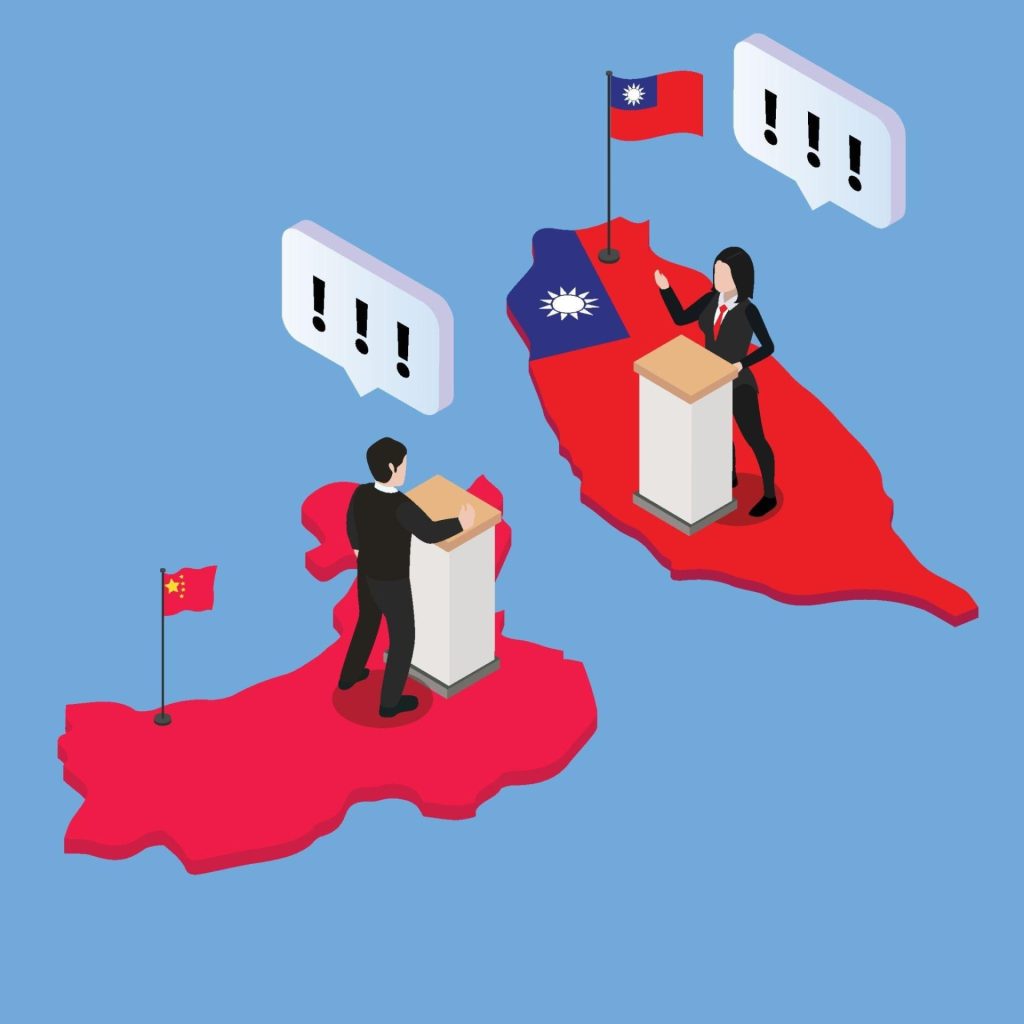
This study investigates whether cultural diplomacy can function as a semi-autonomous framework for sustaining China–Taiwan relations in the absence of formal diplomatic recognition. By integrating six theoretical traditions — soft power, constructivism, identity theory, cultural/public diplomacy, transnationalism, and Track II/III diplomacy — the research reframes cultural exchange as a primary mode of engagement rather than a peripheral supplement to strategic competition.
The analysis demonstrates that dense networks of academic, artistic, and civil society exchange have persisted across successive political crises, generating complex interdependence and relational capital. However, cultural diplomacy remains constrained by institutional asymmetries, contested heritage narratives, and risks of political instrumentalisation. The findings establish cultural diplomacy as an analytically autonomous domain, offering a replicable framework for other politically frozen bilateral contexts.
Keywords: academic exchange; civil society diplomacy; constructivism; cross-strait relations; cultural diplomacy; shared heritage; soft power.
Introduction
The China–Taiwan relationship is conventionally understood as one of the most volatile and intractable sovereignty disputes in contemporary international politics. The dominant scholarly consensus holds that cross-strait relations are fundamentally shaped by the unresolved legacy of the Chinese Civil War, the geopolitical ambitions of the People’s Republic of China, and the strategic imperatives of the United States as Taiwan’s principal security guarantor (Goldstein, 2015; Tucker, 2005).
Within this framework, bilateral interaction is analysed primarily through the lenses of deterrence, power asymmetry, and coercive statecraft. Cultural and social exchange, where it is acknowledged at all, tends to be treated as epiphenomenal — either as a soft instrument of the PRC’s reunification agenda or as a superficial supplement to the more consequential dynamics of hard political contestation.
Rigger (2011) notes that Taiwan’s international standing is routinely assessed in terms of its diplomatic isolation rather than the substantive transnational networks it sustains, reflecting the broader field’s tendency to subordinate relational dimensions of bilateral engagement to geopolitical ones.
This consensus is both empirically incomplete and theoretically constraining. It fails to account for a well-documented and consequential empirical reality: that cross-strait cultural, academic, and civil society exchange has flourished and institutionalised over four decades, persisting through crises that have repeatedly frozen or reversed official political contact.
The 1995–1996 Taiwan Strait Crisis, the periodic collapse of SEF–ARATS dialogue, and successive shifts in political leadership on both sides have disrupted governmental communication without dismantling the denser relational infrastructure maintained by universities, cultural foundations, artistic communities, and civil society organisations.
A framework that reduces cross-strait relations to strategic competition cannot explain why this infrastructure has proven so durable, nor what functions it performs in the absence of formal diplomatic architecture. The security-centric paradigm, moreover, systematically undervalues the constitutive role that cultural exchange plays in constructing the identities, mutual perceptions, and normative frameworks through which each side understands the other — processes that Wendt (1992; 1999) identifies as fundamental to the social production of international reality. Studying cross-strait relations without attending to cultural diplomacy is, in effect, to study the visible structure while ignoring the foundations on which it rests.
This article addresses that lacuna by reframing cultural diplomacy as a primary, rather than peripheral, mode of cross-strait engagement. It advances three interconnected arguments. First, cross-strait cultural diplomacy constitutes a semi-autonomous sphere of bilateral interaction that operates with meaningful independence from direct state political control, sustained by its own institutional logic and professional networks, even as it remains structurally embedded within broader political conditions.
Second, the structural absence of formal diplomatic relations has not produced cultural isolation but has paradoxically incentivised the proliferation of Track II and Track III channels, generating a form of complex interdependence (Keohane and Nye, 1977) that outlasts successive political disruptions. Third, the shared Sinophone cultural inheritance — however contested and differentially appropriated by each side — constitutes a reservoir of relational capital that geopolitically oriented analyses have systematically failed to theorise.
Together, these arguments establish cultural diplomacy as an analytically autonomous domain of inquiry, with a distinct explanatory logic that neither subsumes to, nor is derivable from, the security frameworks that dominate the field.
The central research question is: to what extent can cultural diplomacy function as an autonomous and effective framework for sustaining and developing China–Taiwan relations beyond political considerations? More specifically, the study examines whether cultural and intellectual exchanges constitute merely symbolic interactions or actively contribute to building a durable and structured form of engagement — one capable of generating trust, continuity, and mutual recognition in the absence of a unified political framework.
The question is not merely academic: it bears directly on the conditions under which a negotiated resolution of the cross-strait dispute, when it becomes politically feasible, would find prepared ground or encounter a relational vacuum.
The article proceeds as follows. The next section presents the multi-theoretical framework. The methodology section explains the qualitative, interpretive design and its rationale. The analysis then addresses the five research questions sequentially, before the conclusion advances the study’s original scholarly contributions and broader implications.
Theoretical Framework
This study assembles an original analytical framework from six theoretical traditions, organised around three intersecting axes: a power axis, a relational-identity axis, and a structural-actor axis. The integration is not merely additive; each tradition addresses a distinct analytical dimension that the others cannot fully capture, and their mutual reinforcement is the source of the framework’s explanatory range.
The complete architecture of this six-tradition framework — mapping each theoretical paradigm to its core conceptual contribution and its specific application to the cross-strait context — is presented in Table 1 below, which the reader may consult as a navigational reference throughout the discussion that follows.
Table 1
Theoretical Framework: Analytical Axes, Theories, and Applications to Cross-Strait Cultural Diplomacy
| Analytical Axis | Theory / Scholar | Core Concept | Application for Cross-Strait Relations |
|---|---|---|---|
| Power Axis | Soft Power Theory (Nye, 1990; 2004; 2011) | Culture, values, and foreign policy as sources of attraction rather than coercion | Shared linguistic and artistic heritage as cross-strait relational capital |
| Relational-Identity Axis | Constructivism (Wendt, 1992; 1999) | Identities and interests socially constructed through interaction and shared meanings | Cultural exchanges (re)construct mutual perceptions and normative frameworks across the strait |
| Relational-Identity Axis | Identity Theory (Hall, 1990) | Cultural identity dynamically negotiated, not fixed or originary | Sinophone heritage as a contested but shared resource, differentially appropriated by each side |
| Structural-Actor Axis | Cultural and Public Diplomacy (Cummings, 2003; Melissen, 2005) | Bidirectional cultural exchange; growing civil society role as diplomatic actor | Universities, foundations, and arts organisations as primary agents of cross-strait engagement |
| Structural-Actor Axis | Transnationalism and Complex Interdependence (Keohane and Nye, 1972; 1977) | Non-state actors and multi-channel interactions shape international outcomes | Dense cross-strait civil society networks proliferating in the absence of official diplomatic channels |
| Structural-Actor Axis | Track II/III Diplomacy (Montville, 1991; Chigas, 2010) | Unofficial informal interactions complement formal diplomacy; grassroots people-to-people engagement | Academic, artistic, and cultural exchanges functioning as Track II and III diplomatic processes |
Note. The three-axis organisation corresponds to the analytical architecture developed throughout this section. All six theories are applied in an integrated and mutually reinforcing manner to the China–Taiwan cross-strait context. ‘Sinophone’ is used analytically, following Shih (2007), to acknowledge the shared but differentially appropriate cultural inheritance of both sides of the strait. Huntington’s (1996) framework is engaged critically rather than prescriptively; civilisational affinity is treated as a variable to be empirically assessed, not as an automatic predictor of political harmony.
- Soft Power Theory (Nye, 1990; 2004; 2011)
The foundational conceptual pillar is Joseph S. Nye Jr.’s theory of soft power, developed across Bound to Lead (Nye, 1990), Soft Power (Nye, 2004), and The Future of Power (Nye, 2011). Nye (2004) defines soft power as the capacity of a state — or non-state actor — to shape the preferences of others through attraction rather than coercion or payment, rooted in culture, political values, and foreign policy. In the China–Taiwan context, soft power provides the analytical lens through which shared cultural heritage, artistic production, and intellectual exchange can be understood as instruments of influence and engagement. Critically, Nye (2004) distinguishes soft power from propaganda: credibility and authentic attraction are what render it effective, a distinction that proves analytically decisive when assessing whether China’s expanding cultural projection apparatus — documented by Shambaugh (2013) as substantial yet systematically undermined by the PRC’s own authoritarian practices — constitutes genuine soft power or its simulation. This distinction allows a critical assessment of whether cross-strait cultural diplomacy constitutes genuine mutual attraction or strategically managed narrative.
- Cultural Diplomacy and Public Diplomacy (Cummings, 2003; Melissen, 2005)
The study draws on Milton C. Cummings Jr.’s definition of cultural diplomacy as the bidirectional ‘exchange of ideas, information, values, systems, traditions, beliefs, and other aspects of culture’ with the aim of fostering mutual understanding (Cummings, 2003). This bidirectionality is the defining feature that separates cultural diplomacy from propaganda: the exchange is participatory, not directive. Jan Melissen’s edited volume The New Public Diplomacy (2005) extends this framework to a broader paradigm emphasising the transformative role of civil society, non-governmental organisations, universities, and cultural institutions in shaping transnational relationships. Melissen’s (2005) model is particularly applicable to the China–Taiwan case, where official diplomatic channels are structurally absent and non-state actors accordingly carry disproportionate weight in sustaining cross-strait engagement.
- Constructivism in International Relations (Wendt, 1992; 1999)
Drawing principally on Wendt’s Social Theory of International Politics (1999) and his landmark 1992 article, constructivism posits that the identities and interests of states are not fixed or materially determined but are socially constructed through interaction, norms, and shared meanings. Applied to the cross-strait context, it enables analysis of how cultural exchanges between China and Taiwan actively reconstruct — and in some instances construct a new — identities, mutual perceptions, and normative frameworks. If ‘anarchy is what states make of it’ (Wendt, 1992), then culture is one of the primary means by which actors remake the meanings that govern their relations. The constructivist lens thus allows the study to treat cultural diplomacy not as a superstructural epiphenomenon but as a constitutive force in the production of cross-strait social reality.
- Transnationalism and Non-State Actors (Keohane and Nye, 1972; 1977)
The theory of transnationalism and complex interdependence, developed by Keohane and Nye (1972; 1977), challenges the realist assumption that states are the sole meaningful actors in international relations, highlighting instead the significance of transnational networks — including universities, cultural organisations, diaspora communities, and professional associations — in shaping political and social outcomes.
The concept of complex interdependence (Keohane and Nye, 1977) — characterised by multiple channels of interaction, the absence of a clear hierarchy of issues, and a reduced role for military force — aptly describes the structural reality of cross-strait relations in cultural and educational domains. It provides the theoretical vocabulary for understanding why dense non-governmental networks can persist and even expand under conditions of official political estrangement.
- Identity, Shared Heritage, and Cultural Proximity (Hall, 1990; Huntington, 1996)
Stuart Hall’s (1990) essays on cultural identity posit that cultural identity is neither fixed nor purely originary but produced through ongoing processes of representation and negotiation. Hall’s (1990) framework enables analysis of the complex, contested nature of the Sinophone heritage shared between mainland China and Taiwan — simultaneously invoked as a unifying bond and reinterpreted differently by each side.
The contested construction of national identity within Taiwan itself, as Chu (2004) demonstrates, adds a further layer of complexity: Taiwanese identity politics have progressively differentiated a distinctively Taiwanese national consciousness from Sinophone cultural inheritance, complicating cross-strait cultural diplomacy’s reliance on shared heritage as common ground. In this context, Samuel Huntington’s (1996) The Clash of Civilizations raises the productive question of whether civilisational affinities can serve as stabilising forces in international relations. This study engages Huntington’s (1996) framework critically: civilisational commonality is treated as a hypothesis to be tested against empirical evidence, not as an automatic predictor of harmony.
- Track II Diplomacy and Unofficial Channels (Montville, 1991; Chigas, 2010)
Track II diplomacy, coined by Joseph Montville (1991), refers to unofficial interactions between non-governmental actors — academics, cultural figures, business leaders, and civil society representatives — that complement formal governmental negotiations. This concept is especially pertinent to the China–Taiwan case, where Track I diplomatic relations are absent.
Diana Chigas’s (2010) elaboration further distinguishes Track II from Track III (people-to-people) diplomacy, the latter encompassing grassroots, educational, and cultural initiatives. Both Montville (1991) and Chigas (2010) argue that these unofficial channels generate forms of trust, familiarity, and relational resilience that official diplomacy alone cannot produce, and that they play an indispensable preparatory function when formal negotiations eventually become possible. Cross-strait exchanges in the domains of academia, the arts, and popular culture operate primarily within these frameworks.
Methodology
This study employs a qualitative, interpretive research design grounded in systematic theoretical analysis and critical literature review. Given the structurally constrained nature of cross-strait official relations — which renders large-scale quantitative data collection across both sides methodologically impractical and politically sensitive — the research adopts a document-based and theory-driven approach as its primary methodological strategy.
This design is consistent with established practice in cross-strait scholarship (Bush, 2004; Goldstein, 2015), where interpretive analysis of institutional documents and secondary empirical sources has proven the most reliable means of mapping bilateral dynamics that resist survey-based or archival quantification.
The methodological framework rests on three complementary procedures. First, a critical review of the existing scholarly literature on cross-strait relations, cultural diplomacy, soft power, and public diplomacy was conducted to identify conceptual gaps and to situate this study within ongoing academic debates. Sources were drawn from peer-reviewed journals in international relations, cultural studies, and Asian politics, as well as seminal monographs in the theoretical traditions employed by the study.
Second, a multi-theoretical synthesis assembled an original analytical framework from six established theoretical paradigms, applying them in an integrated and mutually reinforcing manner to the China–Taiwan case; this approach enhances analytical depth and internal validity by ensuring that the framework’s claims are not dependent on any single theoretical premise.
Third, the research critically analyses secondary empirical sources, including institutional reports, policy documents, and documented case studies of academic exchange programmes, artistic collaborations, and joint research initiatives. The study does not claim comprehensive empirical coverage of all cross-strait cultural activities; rather, it uses illustrative evidence to substantiate theoretical arguments and identify patterns that future empirical research may develop further.
Research Questions and Hypotheses
To explore the central research problem, the study is guided by five research questions, each paired with a corresponding hypothesis. As shown in Table 2 below, these questions form a coherent, cumulative architecture, moving from conceptual mapping to actor identification, from identity analysis to structural assessment, and finally to an examination of systemic constraints. The full correspondence between each research question and its operationalising hypothesis constitutes the logical backbone of the study’s argument and the organising principle of the analysis that follows.
Table 2
Research Questions and Corresponding Hypotheses
| # | Research Question | Corresponding Hypothesis |
|---|---|---|
| RQ1 | How is cultural diplomacy between China and Taiwan conceptualised and practised in contemporary contexts? | Cultural diplomacy constitutes a semi-autonomous sphere of interaction operating beyond direct political influence, relying on shared heritage and intellectual collaboration. |
| RQ2 | What are the main channels and actors involved in shaping cultural and academic exchanges across the Taiwan Strait? | Academic and cultural exchanges play a central role in maintaining continuity in cross-strait relations by fostering dialogue, knowledge production, and interpersonal connections. |
| RQ3 | To what extent do cultural interactions contribute to reinforcing shared identity and mutual understanding? | The effectiveness of cultural diplomacy lies in its soft power dimension, enabling both sides to build trust and symbolic proximity without formal political negotiations. |
| RQ4 | Can cultural diplomacy be considered an independent and sustainable mode of engagement, distinct from political and strategic dynamics? | Despite its potential, cultural diplomacy faces structural and contextual limitations — including institutional constraints and divergent cultural policies — which may affect its long-term sustainability. |
| RQ5 | What are the limitations and challenges facing cultural diplomacy in this specific cross-cultural context? | Addressed empirically through the broader theoretical framework via identification of structural constraints, institutional asymmetries, and political instrumentalisation risks. |
Note. Hypotheses H1–H4 correspond directly to Research Questions RQ1–RQ4. Research Question RQ5 is addressed empirically through the broader theoretical framework rather than through a discrete standalone hypothesis.
Results
- Conceptualisation and Practice of Cross-Strait Cultural Diplomacy (RQ1)
Cross-strait cultural diplomacy is best understood as a semi-autonomous sphere of bilateral interaction — one that operates with meaningful independence from direct state political control, sustained by its own institutional logic, professional networks, and cultural rationales, while remaining structurally embedded within, and ultimately vulnerable to, broader political conditions. This designation draws on Wendt’s (1999) constructivist emphasis on the relative autonomy of social structures and on field-theoretical insights derived from Bourdieu (1993), whose concept of the field precisely captures this intermediate status between full state instrumentalisation and genuine civil-society independence.
The enabling structural context for this semi-autonomy was created, paradoxically, by political constraint. The cross-strait diplomatic impasse — rooted in the unresolved outcome of the Chinese Civil War of 1945–1949 (Westad, 2003) and institutionally formalised through the quasi-diplomatic architecture of the Straits Exchange Foundation (SEF) and the Association for Relations Across the Taiwan Straits (ARATS) — removed the orthodox channels through which bilateral engagement would otherwise proceed.
In their absence, cultural and civil society actors assumed structural functions that, in more normalised bilateral relationships, would fall to state institutions. SEF and ARATS were both established in 1991 to manage practical civilian exchanges without formal diplomatic recognition; their creation signalled that the structural absence of state-to-state relations had itself become a driver of institutional innovation at the non-governmental level.
The lifting of martial law in Taiwan in July 1987 and the authorisation of civilian mainland visits that November marked the pivotal opening of this modern era, enabling the first authorised exchanges and establishing the relational infrastructure that has since deepened across successive political cycles.
- Channels, Actors, and Non-State Agency (RQ2)
Existing studies of cross-strait interaction have largely centred on state actors, official policy, and formal institutional frameworks. This study foregrounds the agency of non-state actors — universities, cultural foundations, artistic communities, and civil society organisations — as primary architects of cross-strait engagement, thereby expanding the empirical and theoretical scope of cross-strait studies to include actors and processes that have been structurally underrepresented in the literature. The formal absence of diplomatic recognition has not produced cultural isolation.
On the contrary, it has incentivised the proliferation of non-state channels of engagement, consistent with the logic of complex interdependence (Keohane and Nye, 1977): where official channels are blocked, societal actors create substitute pathways. Both Cummings (2003) and Melissen (2005) argue that twenty-first-century public diplomacy is increasingly driven by non-governmental actors rather than states alone, and the cross-strait case bears this out with force.
- Shared Identity, Heritage, and Mutual Understanding (RQ3)
Through the lens of soft power theory (Nye, 1990; 2004; 2011), the China–Taiwan relationship harbours significant reserves of cultural attraction: a shared linguistic inheritance, a common philosophical tradition rooted in Confucian and Daoist thought, overlapping artistic sensibilities, and a shared canon of classical literature. These constitute a form of relational capital that geopolitical analyses have systematically undervalued. Yet intellectual rigour demands acknowledgment of limits.
Chu’s (2004) analysis of Taiwan’s national identity politics demonstrates that the processes of democratisation and political pluralisation since the late 1980s have progressively constructed a distinctively Taiwanese political identity that is not simply reducible to Sinophone cultural inheritance — and that sometimes positions itself in explicit contrast to it.
Hall’s (1990) analysis of cultural identity as a site of negotiation and contestation, rather than stable consensus, provides the theoretical vocabulary for this phenomenon: the ‘shared culture’ invoked by both sides is not a fixed inheritance but a contested terrain, and cultural diplomacy, far from transcending this tension, sometimes mirrors and reproduces it. This is not a flaw in cultural diplomacy as a framework but an honest account of its conditions of operation.
- Autonomy, Sustainability, and Structural Constraints (RQ4)
Wendt’s (1992; 1999) constructivist insight that international realities are socially constructed proves especially illuminating in this context. Every academic collaboration, every jointly curated exhibition, every translated literary work constitutes a small but cumulative act of mutual recognition — each one partially reframing the narrative of irreducible difference.
Bush (2004) observes that the ‘web of interdependence’ across the strait, though informal and asymmetric, has proven durable across successive political crises precisely because it is embedded in societal rather than governmental structures. Yet the structural constraints identified in this study remain formidable: the asymmetry of institutional resources between China and Taiwan, compounded by the PRC’s strategic instrumentalisation of cultural projection (Shambaugh, 2013), creates an inherently unequal exchange environment.
The risk of cultural diplomacy being appropriated for political messaging — with the People’s Republic framing cross-strait exchange as evidence of reunification’s inevitability while Taiwan reframes it as evidence of its distinctive cultural identity — is a permanent feature of the bilateral landscape. Its relative autonomy is both contingent and perpetually negotiated.
- Limitations and Challenges (RQ5)
military confrontation. The PRC’s Anti-Secession Law (National People’s Congress, 2005), which authorises non-peaceful means under defined conditions, formalises the coercive backstop that constitutes the permanent political ceiling against which claims about cultural diplomacy operating ‘beyond politics’ must be soberly assessed.
The continued trajectory of PRC military modernisation directed at Taiwan further underscores the enduring primacy of strategic calculation within which cultural engagement operates (U.S. Department of Defense, 2022). A systematic synthesis of enabling and constraining factors, organised across five thematic dimensions, is presented in Table 3 below.
Table 3
Study Findings: Enabling and Constraining Factors of Cross-Strait Cultural Diplomacy by Thematic Dimension
| Thematic Dimension | Enabling Factors | Constraining Factors |
|---|---|---|
| Nature of Cultural Diplomacy | Semi-autonomous sphere; meaningful independence from direct state control; sustained by own institutional logic and cultural rationales | Remains structurally embedded within broader political conditions; ultimately vulnerable to shifts in official policy on either side |
| Heritage and Identity | Shared Sinophone linguistic inheritance; common philosophical tradition; overlapping artistic sensibilities constituting a form of relational capital | Contested heritage narratives; each side claims authentic custodianship; Hall’s (1990) contested identity dynamics produce divergent appropriations of nominally common culture |
| Non-State Actor Networks | Dense non-governmental networks; universities, cultural foundations, and artistic communities as primary agents; robust academic and artistic exchanges | Institutional asymmetries between China and Taiwan; vulnerability of non-governmental networks to disruption by political developments on either side |
| Track II / Track III Engagement | Structural absence of formal diplomacy has paradoxically incentivised Track II and III engagement; generates complex interdependence capable of outlasting political disruptions | Risk of political instrumentalisation; Track II/III processes are not designed to replace formal peace processes; dependent on political tolerance from both governments |
| Long-Term Sustainability | Demonstrated capacity to outlast political crises and survive institutional disruptions; reserves of goodwill, familiarity, and mutual recognition that any future political architecture would need to draw upon | Fundamental political dispute unresolved; cultural diplomacy cannot resolve sovereignty questions; relative autonomy is both contingent and perpetually negotiated |
Note. This table synthesises findings across five thematic dimensions. All enabling and constraining factors are derived from the theoretical analysis developed in the study. The study concludes that cross-strait cultural diplomacy is ‘neither a panacea nor a mere epiphenomenon’ but a semi-autonomous architecture of engagement with demonstrated capacity to outlast political crises. ‘Complex interdependence’ (Keohane and Nye, 1977) is identified as the structural model that best describes the non-governmental dimension of cross-strait relations in cultural and educational domains.
Discussion and Conclusions
The question at the heart of this paper — whether cultural diplomacy can function as an autonomous and effective framework for sustaining China–Taiwan relations beyond political considerations — does not admit a simple answer, and the study has been designed to resist the temptation of offering one. What the theoretical framework assembled here reveals is that cultural diplomacy occupies a liminal but consequential space: it is neither fully independent of political forces nor reducible to them. It is, rather, a semi-autonomous architecture of engagement (Wendt, 1999; Bourdieu, 1993) that draws its structural integrity from the very institutional foundations that formal politics has consistently failed to consolidate. To understand it clearly is to understand both what it can and what it cannot do.
Cross-strait cultural diplomacy is neither a panacea nor a mere epiphenomenon. It is a genuine, if structurally fragile, mode of engagement — one that has demonstrated a remarkable capacity to outlast political crises, survive institutional disruptions, and sustain a form of bilateral relationship that formal politics alone has consistently failed to define or stabilise. Its power lies not in resolving the fundamental political dispute but in preserving the human dimension of that dispute: the recognition, however contested and provisional, that on both sides of the strait there are people reading the same classical texts, engaging in the same musical and artistic traditions, and inheriting, however differently, the same history.
As Rigger (2011) observes, Taiwan’s significance in the region extends far beyond its contested diplomatic status; it represents a living experiment in the relationship between Chinese cultural inheritance and liberal democratic practice — an experiment whose outcomes carry implications not only for cross-strait relations but for the broader trajectory of Chinese-speaking societies worldwide.
This study advances six original scholarly contributions. First, it systematically reframes the China–Taiwan relationship through cultural diplomacy as a primary rather than peripheral analytical lens, establishing cultural engagement as a structurally significant semi-autonomous sphere of bilateral interaction.
Second, it integrates six theoretical traditions into a coherent three-axis analytical architecture — power, relational-identity, and structural-actor — offering a replicable model applicable to comparable cases of politically frozen bilateral relations, including Cyprus–Turkey, North Korea–South Korea, and Israel–Palestine. Third, it foregrounds universities, cultural foundations, and civil society organisations as primary architects of cross-strait engagement, expanding the empirical scope of cross-strait studies to actors structurally underrepresented in the security-oriented literature.
Fourth, it bridges cultural diplomacy theory and East Asian area studies by applying the framework rigorously to a case defined by the coexistence of absent mutual recognition with deep civilisational ties.
Fifth, drawing on Hall’s (1990) identity theory, it analyses Sinophone cultural heritage as a contested and dynamically negotiated resource rather than an unproblematic given — introducing conceptual nuance into a discourse that has too often treated shared heritage as a stable foundation.
Sixth, it provides an evidence-based rationale for the institutional protection and funding of cultural and academic exchange networks as a strategic priority transcending ideological divisions, demonstrating that such networks have historically sustained cross-strait communication through precisely the moments when political channels have failed.
The broader academic implication of this study invites a recalibration of how international relations scholarship approaches politically frozen conflicts. The cross-strait case demonstrates that the absence of a formal diplomatic framework is not equivalent to the absence of a relational one; civil society actors, cultural institutions, and intellectual communities can generate and sustain forms of bilateral engagement that outlast multiple cycles of political deterioration.
Future research would benefit from deeper empirical mapping of these non-governmental networks, longitudinal analysis of their effects on public attitudes across the strait, and comparative examination of analogous cases where cultural engagement has either accelerated or complicated political normalisation. What this study has sought to establish, above all, is the analytical legitimacy of cultural diplomacy as a field of inquiry in its own right — not a peripheral footnote to hard geopolitical analysis, but an indispensable dimension of how divided societies sustain their relationship with one another across the communicative gaps that political power produces.
References
Bourdieu, P. (1993). The field of cultural production: Essays on art and literature. Polity Press.
Bush, R.C. (2004). Untying the knot: Making peace in the Taiwan Strait. Brookings Institution Press.
Chigas, D. (2010). Track II (citizen) diplomacy. In T. Paffenholz (Ed.), Civil society and peacebuilding: A critical assessment (pp. 21–44). Lynne Rienner Publishers.
Chu, Y.-h. (2004). Taiwan’s national identity politics and the prospect of cross-strait relations. Asian Survey, 44(4), 484–512.
Cummings, M.C., Jr. (2003). Cultural diplomacy and the United States government: A survey. Center for Arts and Culture.
Croissant, A., Kuehn, D., Lorenz, P., & Chambers, P. W. (2013). Taiwan: From martial law to civilian control. In Democratization and civilian control in Asia (pp. 93–121). Palgrave Macmillan. https://doi.org/10.1057/9781137319272_5
Fell, D. (2018). Government and politics in Taiwan (2nd ed.). Routledge.
Garver, J.W. (1997). Face off: China, the United States, and Taiwan’s democratization. University of Washington Press.
Goldstein, S.M. (2015). China and Taiwan. Polity Press.
Hall, S. (1990). Cultural identity and diaspora. In J. Rutherford (Ed.), Identity: Community, culture, difference (pp. 222–237). Lawrence and Wishart.
Huntington, S.P. (1996). The clash of civilizations and the remaking of world order. Simon and Schuster.
Keohane, R.O., & Nye, J.S., Jr. (Eds.). (1972). Transnational relations and world politics. Harvard University Press.
Keohane, R.O., & Nye, J.S., Jr. (1977). Power and interdependence: World politics in transition. Little, Brown.
Melissen, J. (Ed.). (2005). The new public diplomacy: Soft power in international relations. Palgrave Macmillan.
Lin, D. (2022). ‘One China’ and the cross-Taiwan Strait commitment problem. The China Quarterly, 252. https://doi.org/10.1017/S0305741022001060
Montville, J.V. (1991). Transnationalism and the role of Track-Two diplomacy. In W.S. Thompson & K.M. Jensen (Eds.), Approaches to peace: An intellectual map (pp. 253–269). United States Institute of Peace Press.
National People’s Congress of the People’s Republic of China. (2005). Anti-Secession Law (adopted 14 March 2005). https://interpret.csis.org/translations/anti-secession-law/
Nye, J.S., Jr. (1990). Bound to lead: The changing nature of American power. Basic Books.
Nye, J.S., Jr. (2004). Soft power: The means to success in world politics. PublicAffairs.
Nye, J.S., Jr. (2011). The future of power. PublicAffairs.
Rigger, S. (1999). Politics in Taiwan: Voting for democracy. Routledge.
Rigger, S. (2011). Why Taiwan matters: Small island, global powerhouse. Rowman and Littlefield.
Rigger, S. (2016). The tiger leading the dragon: How Taiwan propelled China’s economic rise. Rowman and Littlefield.
Ross, R. S. (2000). The 1995–96 Taiwan Strait confrontation: Coercion, credibility, and the use of force. International Security, 25(2), 87–123. https://doi.org/10.1162/016228800560462
Shambaugh, D. (2013). China goes global: The partial power. Oxford University Press.
Shih, S.-M. (2007). Visuality and identity: Sinophone articulations across the Pacific. University of California Press.
Straits Exchange Foundation. (2024). Introduction to the SEF. https://www.sef.org.tw/eBook/introduction_en/index.html
Tucker, N.B. (Ed.). (2005). Dangerous strait: The U.S.–Taiwan–China crisis. Columbia University Press.
U.S. Congress. (1979). Taiwan Relations Act, Public Law 96-8, 22 U.S.C. §§ 3301 et seq. https://www.congress.gov/bill/96th-congress/house-bill/2479
U.S. Department of Defense. (2022). Military and security developments involving the People’s Republic of China 2022: Annual report to Congress. Office of the Secretary of Defense.
Wendt, A. (1992). Anarchy is what states make of it: The social construction of power politics. International Organization, 46(2), 391–425.
Wendt, A. (1999). Social theory of international politics. Cambridge University Press.
Westad, O.A. (2003). Decisive encounters: The Chinese Civil War, 1946–1950. Stanford University Press.